









If your pipeline feels slower today, you’re experiencing the same B2B lead generation challenges many teams face. Buyers have changed. Markets have tightened. Teams feel the pressure to do more with less. And from what I’ve seen running thousands of outbound and research campaigns, many companies blame the symptoms instead of the actual causes.
Let’s ground this with a few numbers we can’t ignore. Buyers now spend only 17% of their total buying journey, which makes B2B lead gen harder unless you deeply understand your target audience. And because the market shifts so quickly, B2B contact data decays at roughly 30% per year, according to multiple data-quality analyses.
But the reason isn’t just competition. Most pipeline slowdowns come from structural gaps that affect every lead, from your outbound touchpoints to your lead gen and broader generation efforts, no matter how much lead volume you try to push. After working across SaaS, cybersecurity, manufacturing, fintech, logistics, and more, I’ve seen the same patterns repeat again and again.
So it raises a bigger question: what are the challenges of lead generation that keep showing up across every industry, no matter the tools or tactics?
- Your ICP Isn’t Precise Enough
- Data Quality Is Undermining Your Funnel
- Your Outreach Isn’t Aligned With Buyer Timing
- Sales and Marketing Misalignment Slows Lead Velocity
- Sales Reps Don’t Have Time for Consistent Prospecting
- Channel Fragmentation Creates More Noise, Not Insights
- Treating Leads as Data Points Instead of Humans
- How SalesAR Handles Common B2B Lead Generation Challenges
- Conclusion
- FAQ
Your ICP Isn’t Precise Enough
I talk to a lot of teams who confidently say, “We already know our Ideal Customer Profile.” Then I look at who they’re targeting… and it’s half the market. If your definition of an ideal customer is basically “mid-sized companies in X industry,” you’re missing the nuance that separates a prospect from a buyer. And this is where most slow pipelines begin.
From what I’ve seen at SalesAR, it has three layers:
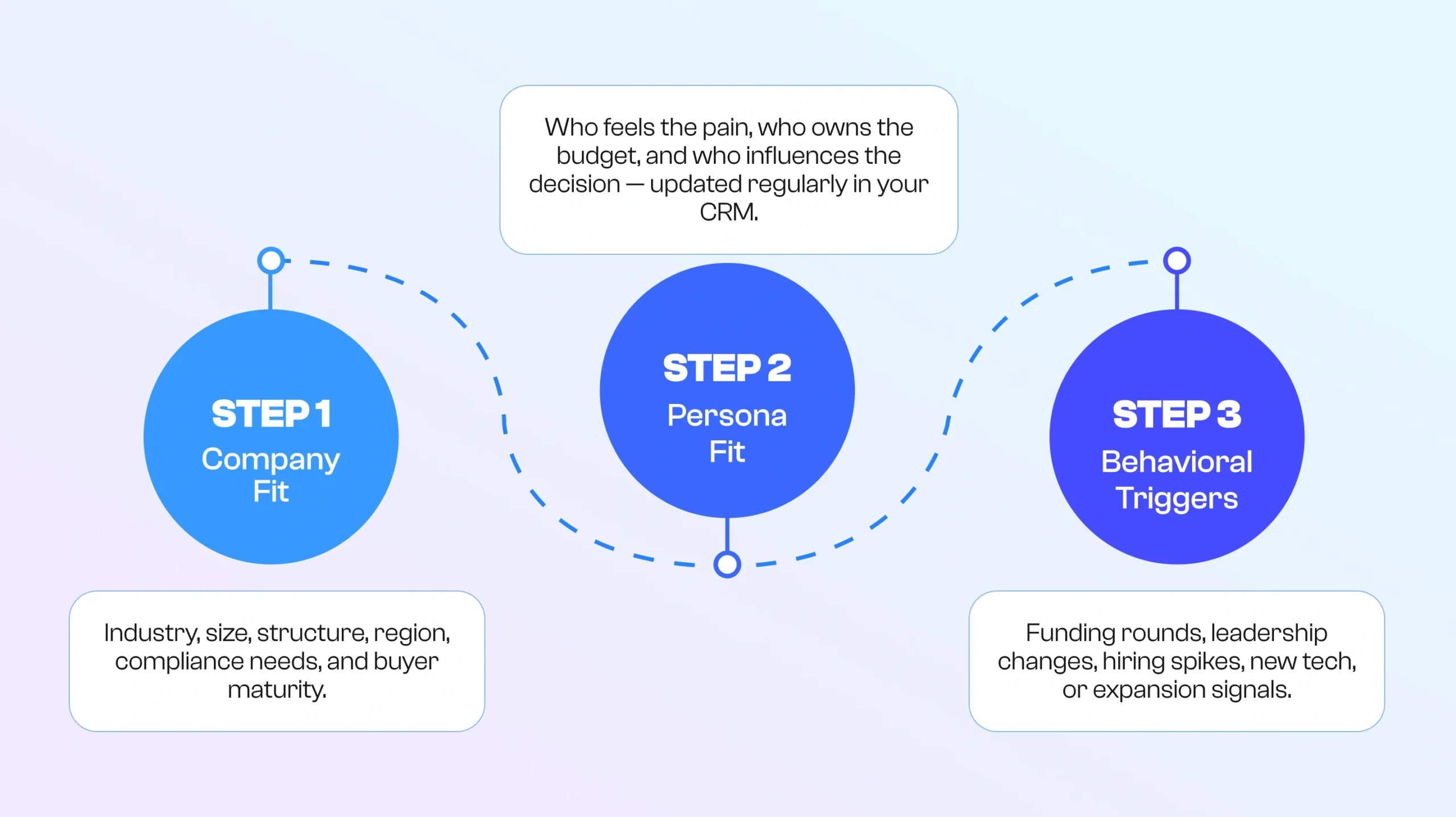
- Company fit: Not just industry and headcount. Also, structure, business model, region, compliance requirements, and buyer sophistication.
- Persona fit: Who feels the problem most? Who owns the budget? Who influences the decision? These roles shift constantly, and unless your sales team and CRM updates reflect that, no amount of lead generation fixes will improve targeting accuracy.
- Behavioral triggers: Funding rounds, new leadership, hiring trends, technology adoption, and expansion plans.
When one of these layers is missing, the volume game starts. Teams blast wider. Lists grow, but pipeline quality drops. And when that happens, reps assume the problem is email deliverability or channel — when the real issue is that the wrong people are being contacted in the first place.
Tightening your Ideal Customer Profile is focusing your time where buying energy already exists. This alone can unlock more qualified conversations without sending a single extra email.
Data Quality Is Undermining Your Funnel
If your marketing funnel feels less responsive or oddly inconsistent, there’s a good chance the root problem lies in the data. Lead generation often collapses when the data foundation weakens — when your lead source is outdated, your email list decays, and your analytics or automation tools no longer reflect reality.
Wrong emails, wrong roles, outdated org charts, people who left the company months ago… all of this quietly drains performance long before you notice. And the numbers are brutal.

SalesAR Insight: Nearly 75% of marketers say at least 10% of their quality lead data is inaccurate or incomplete, and more than 60% say poor data directly hurts campaign performance and disrupts lead routing.
I see this inside outbound programs more often than anything else. Teams send emails to contacts who no longer work there. They pitch to the wrong stakeholders. They rely on CRM records that haven’t been updated since last year’s conference. And every time a rep hits a bounce, the domain reputation takes a hit too.
This is why modern outbound can’t rely on one-time list building or quarterly database cleanups. The market shifts too fast. People change jobs every few months. Companies restructure. Titles evolve. Buying committees expand. Without continuous refresh cycles, a campaign that started strong becomes ineffective within weeks.
From a SalesAR standpoint, enrichment and validation are no longer optional extras. They’re the engine oil. They keep the system running smoothly so reps can focus on conversations instead of detective work. Good data improves deliverability, boosts and raises the ceiling for every channel you use.
Your Outreach Isn’t Aligned With Buyer Timing
One of the biggest disconnects I see in outbound programs is timing. You can have a perfect Ideal Customer Profile, great data, and strong personalization. Still, if a decision-maker isn’t anywhere near a purchasing window, your lead gen challenges spike — no amount of cold calling, email marketing, or clever messaging will resolve that pain point.
When you do catch people at the right moment, everything moves faster. Timing-based outreach converts 2–4× better than standard outbound. I see the same thing every day: when timing aligns, reply rates spike, meeting acceptance doubles, and deals move with far less friction.
So how do you align your B2B lead generation strategies with real-world buying windows and deliver valuable insights at the exact moment high-value accounts are ready to buy?
You stop relying purely on volume and start watching for triggers. These signals indicate that a company is shifting priorities, facing new lead generation problems, or entering a budget-friendly phase.
Some of the most potent triggers include:
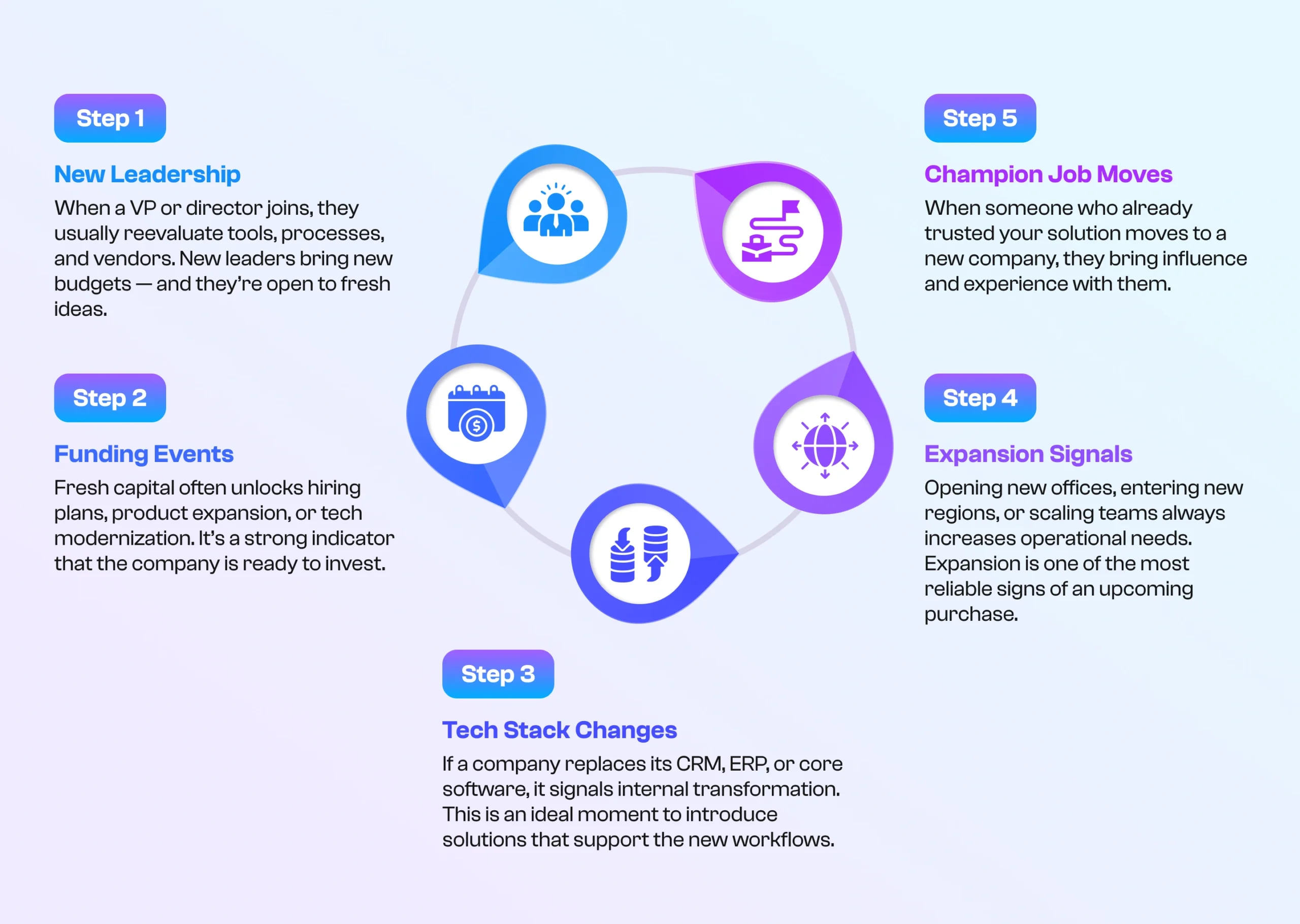
- New leadership hires (especially VP-level and above). New leaders bring new tools, new processes, and new budgets.
- Funding events. Fresh capital often means expansions, tech upgrades, and bigger purchasing power.
- Technology changes. If they just swapped their CRM, ERP, or core stack – that’s a window.
- Geographic or team expansion. More headcount = new needs.
- Job changes of your former champions. People buy from people they trust, and champions carry influence wherever they go.
Sales and Marketing Misalignment Slows Lead Velocity
Let’s talk about one of the most predictable causes of lost B2B sales: misalignment between sales and marketing teams, where each team follows a different sales process, leaving the marketing team unsure how leads are handled.

SalesAR Insight: Sales don’t follow up on 63% of marketing-generated leads. When I share this with teams, someone always says, “That can’t be true for us.” Then we check their CRM… and it usually is.
Here’s the cycle I see over and over:
- Sales claims the leads aren’t qualified.
- Marketing insists sales don’t follow up properly.
- Both sides work hard, just not toward the exact definition of success.
- The result? Slower velocity across the CRM, weaker conversion, and fewer opportunities to close more deals — all of which drag down ROI.
Fixing this isn’t about pep talks. It’s operational. It’s measurable. And it starts with shared language.
From a SalesAR standpoint, the highest-performing teams adopt a few core practices:
- Shared definitions (MQL, SQL, SAL). Everyone agrees on what “qualified” means, and the criteria remain consistent.
- Quarterly ICP calibration sessions. The ideal customer evolves constantly, and both teams need the same real-time picture.
- A clear SLA for handoff. Who follows up? How fast? How many touches? No ambiguity means fewer dropped leads.
- Unified dashboards. When both teams look at the same metrics, reporting stops feeling like finger-pointing.
Alignment raises lead velocity. Once sales and marketing move in sync, conversion rates improve, follow-up becomes reliable, and the pipeline grows without forcing anyone to send more emails or spend more on ads.
Sales Reps Don’t Have Time for Consistent Prospecting
If your pipeline swings from strong one month to dry the next, it’s rarely because the market changed overnight. In most cases, it’s because prospecting quietly slipped down the priority list. And it’s not hard to see why: internal teams are overloaded with demos, customer calls, reporting, CRM hygiene, and endless internal requests.
From what I’ve seen across companies of all sizes, it needs structure: clear blocks of time, defined daily actions, and a process that reps can repeat without burning out. Without routines, pipeline volatility becomes unavoidable. Some weeks, the team is fully booked with demos. A month later, everyone is staring at empty calendars, wondering where the meetings went.
This is also why many organizations rely on dedicated SDRs to generate new leads, stabilize lead volume, and help teams reach a wider audience without overwhelming their AEs.
When you have specialists focused solely on generating conversations, volume stays stable, even when AEs are buried in deals. For many companies, this stabilizes results faster.
Channel Fragmentation Creates More Noise, Not Insights
I see many teams fall into the same trap: if one channel slows down, they immediately add two more. Before long, funnel and buyer journey become a chaotic mix of emails, calls, LinkedIn messages that bury your actual offer about the product or service — even if your landing pages or infographics are great.
The assumption is that “more channels = more chances.” But in practice, it often creates the opposite effect: scattered emails and burned-out audiences.
SalesAR Insight: 62% of buyers prefer only 2–3 touchpoints before deciding whether to engage. Yet most sequences stretch to eight or ten. When people see the same generic nudge across too many channels, their interest drops rather than grows.
The best-performing campaigns choose channels based on how the audience behaves, not whatever is trending this quarter. Some industries ignore cold calls entirely. Some personas respond well to short-form email. Others prefer a direct calendar link after a short sequence. Matching the style to the B2B buyer matters far more than blanket coverage.
Here’s where teams can simplify without losing reach:
- Pair channels intentionally. Good combos include email + LinkedIn, call + voicemail + event-driven follow-up. Pairing creates familiarity without overwhelm.
- Use channels to reinforce, not repeat. An add or search engine touch shouldn’t say the same thing as your email. Each channel should add context, not copy/paste messaging.
- Stop adding channels when performance dips. Performance usually dips because targeting or timing is off.
When channel selection follows buyer behavior instead of trends, many of the common challenges in lead generation disappear. Buyers feel less pressure and sequences become easier to personalize, because the goal is simply to be present where the conversation naturally fits.
Treating Leads as Data Points Instead of Humans
One of the fastest ways to slow a pipeline is weak personalization, which turns warm leads cold instead of nurturing them into high-quality conversations. When it feels automated, generic, or tone-deaf, prospects tune out instantly.
Humanized outreach comes from context; something that shows you understand what the person is dealing with, why their role cares about the problem, and what might have changed in their world recently.
What does that look like in practice?
- Tie your message to a real context. A hiring spike, a new executive, recent funding, a product launch – something that signals awareness, not automation.
- Lead with clarity, not pitches. Buyers don’t want a feature dump. They want to know why you reached out and how it connects to their priorities.
- Mirror their communication style. Short messages for busy execs, more structured notes for technical teams, casual for startup founders.
- Be helpful before being persuasive. Sometimes the best “touch” is a resource or suggestion that expects nothing in return.
When leads feel treated like humans, conversations start faster, trust forms quicker, and deals move with far less resistance. In a market where everyone is sending more offers than ever, the companies that communicate with empathy stand out immediately.
How SalesAR Handles Common B2B Lead Generation Challenges
After reviewing thousands of outbound programs, one pattern always emerges: pipelines slow down not because of a single issue, but because multiple small gaps stack up. That’s why solving these challenges requires a structured approach. At SalesAR, we use a simple framework that keeps every piece of the process aligned and predictable:
Fit → Data → Timing → Channels → Process → Consistency
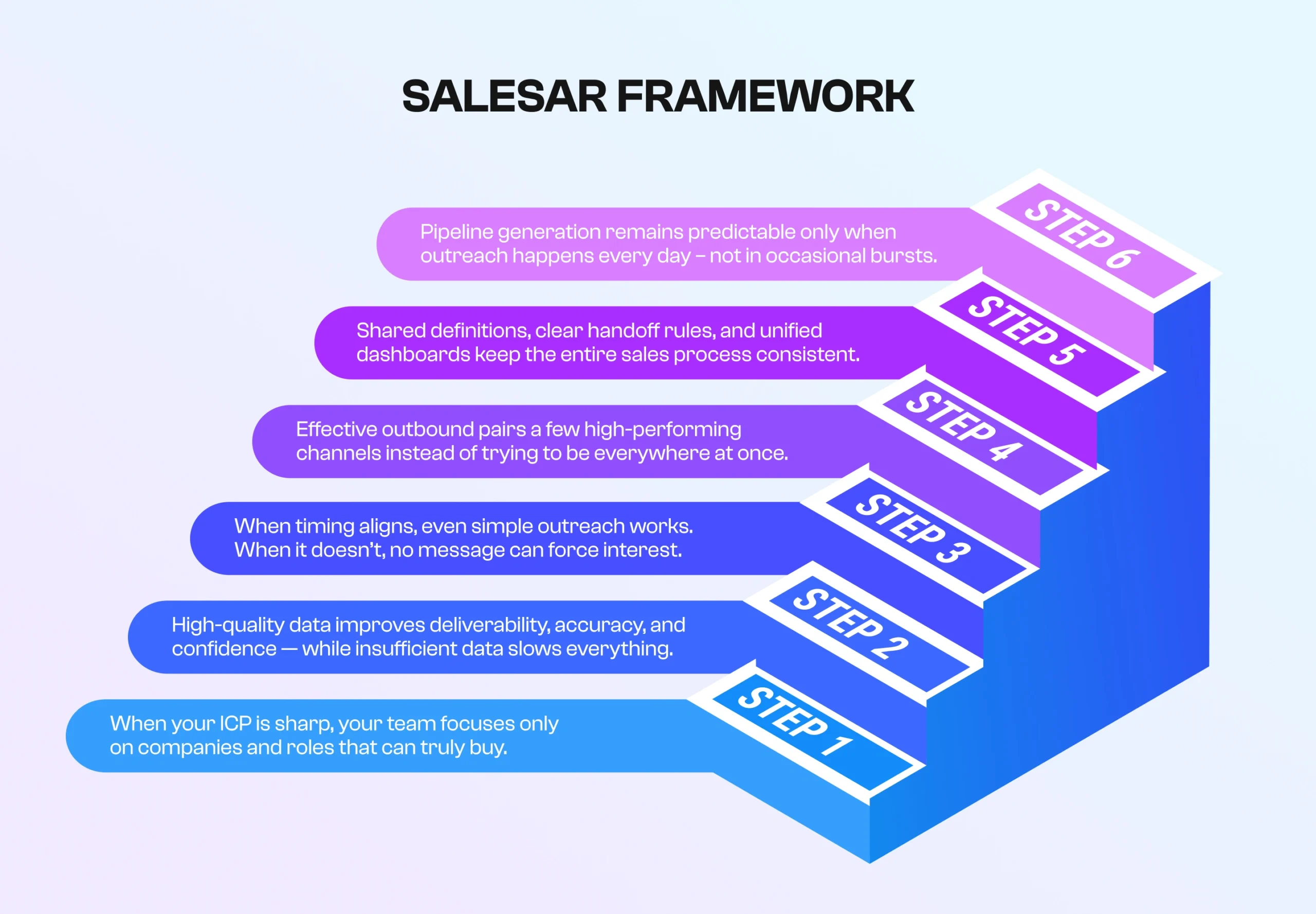
Here’s how each part works and why missing even one slows everything else.
- Fit. This is your ICP. When targeting is crisp, every downstream action improves. Without it, reps talk to the wrong companies, the wrong roles, or contacts who have no practical ability to buy.
- Data. Clean, validated, enriched data gives your team confidence. Bad data wastes time, lowers deliverability, and creates pipeline drag long before results hit the dashboard.
- Timing. Catch a person during an active buying window, and even simple outreach works. Miss the window, and the best personalization won’t force action.
- Channels. Effective outbound doesn’t require being everywhere. It requires using the few channels your audience responds to and pairing them in a way that feels natural, not overwhelming.
- Process. Clear SLAs, shared definitions, handoff rules, and unified dashboards enable sales and marketing to operate as a single system rather than two disconnected teams.
- Consistency. Outbound breaks down when prospecting stops. Stable daily activity is what makes pipeline generation predictable.
When all six elements support each other, you unlock lead generation fixes that increase the number of qualified opportunities, shorten the sales cycle, and drive successful B2B lead generation — no matter the number of leads you start with.
The companies that follow this model remove guesswork and build a steady stream of opportunities every single month.
Conclusion
The market is tighter, competition sharper, and B2B businesses now face more common lead generation challenges than ever. But solving the problem above creates predictable lead generation success without more tools or more people.
You can book a call to walk through your current lead generation setup, or request a deeper diagnostic review of what’s holding your outbound back. A few structural fixes can change the entire pipeline and help your team win in a market where every lead counts.
Talk to our team about building a lead gen strategy tailored to your goals.
FAQ
What are your biggest B2B lead generation challenges?
Most teams struggle with the same core issues: outdated data, poor timing, scattered channel strategy, and inconsistent prospecting routines. If your pipeline feels slower than it should, it’s usually a mix of these rather than one single problem.
How often should B2B data be refreshed to keep outreach effective?
Data should be validated continuously. Teams that see the best outbound results refresh high-value segments every 2–4 weeks.
How do I keep reps consistent with prospecting when their schedules are full?
Give them a structure they can rely on: protected prospecting blocks, clear daily activity targets, and easy-to-access target lists. When those pieces are in place, consistency improves naturally because reps don’t have to reinvent their workflow every day.
When should I consider using an external SDR or lead gen team?
If you’re burning too many hours on research and data cleanup, an external team can stabilize results immediately — one of the most practical lead gen solutions for companies that need a predictable pipeline without hiring or expanding internally.
How can I measure whether my sales and marketing teams are aligned?
Look at a few simple signals: shared definitions for lead stages, a documented SLA for follow-up, consistent feedback loops, and one dashboard both teams rely on. If these elements aren’t in place, leads will slip through the cracks, and collaboration will always feel uneven.