






Marketing today is anything but linear. It’s experiential, continuous, and driven by data. Audiences move between mobile apps, in-store visits, emails, ads, and live chats — and they expect every interaction to feel connected. When those touchpoints work together, brands move from background noise to genuine connection.
Omnichannel marketing has become the standard for growth in 2025. The best agencies bring structure and strategy to this complexity. They combine creativity, technology, and data to craft experiences that flow naturally across platforms and devices. Whether it’s a B2B campaign built on automation and outreach or a retail rollout spanning digital and physical stores, the goal is the same: one brand, one voice, everywhere.
Why Omnichannel Marketing Defines 2025
You’ve probably felt it: the boundary between online and offline is slipping away. Digital ads drive in-store purchases, email triggers retargeting campaigns, and a social post can spark a conversation that ultimately leads to a sale. Data shows we no longer operate in isolated silos.
For example, one study finds that more than 70% of buyers engage with at least three channels before making a purchase. Brands that implement proper omnichannel strategies see retention gains of up to 89% compared to less integrated approaches.
In 2025, customers expect personalization, consistency, and convenience. They want to start a conversation in chat, continue via the app, pick up in-store, and still feel that the brand remembers them. That’s true for B2C and increasingly for B2B. In B2B, omnichannel means you’ve got automation working alongside outbound outreach and your SDRs, so marketing and sales align rather than work in silos.
Pillars of the Best Omnichannel Marketing Agency
The best omnichannel agencies think like architects. Every platform, every campaign, and every piece of data fits into a structure designed for one purpose: a seamless, connected customer experience. Here are the five pillars that define a great omnichannel marketing agency.
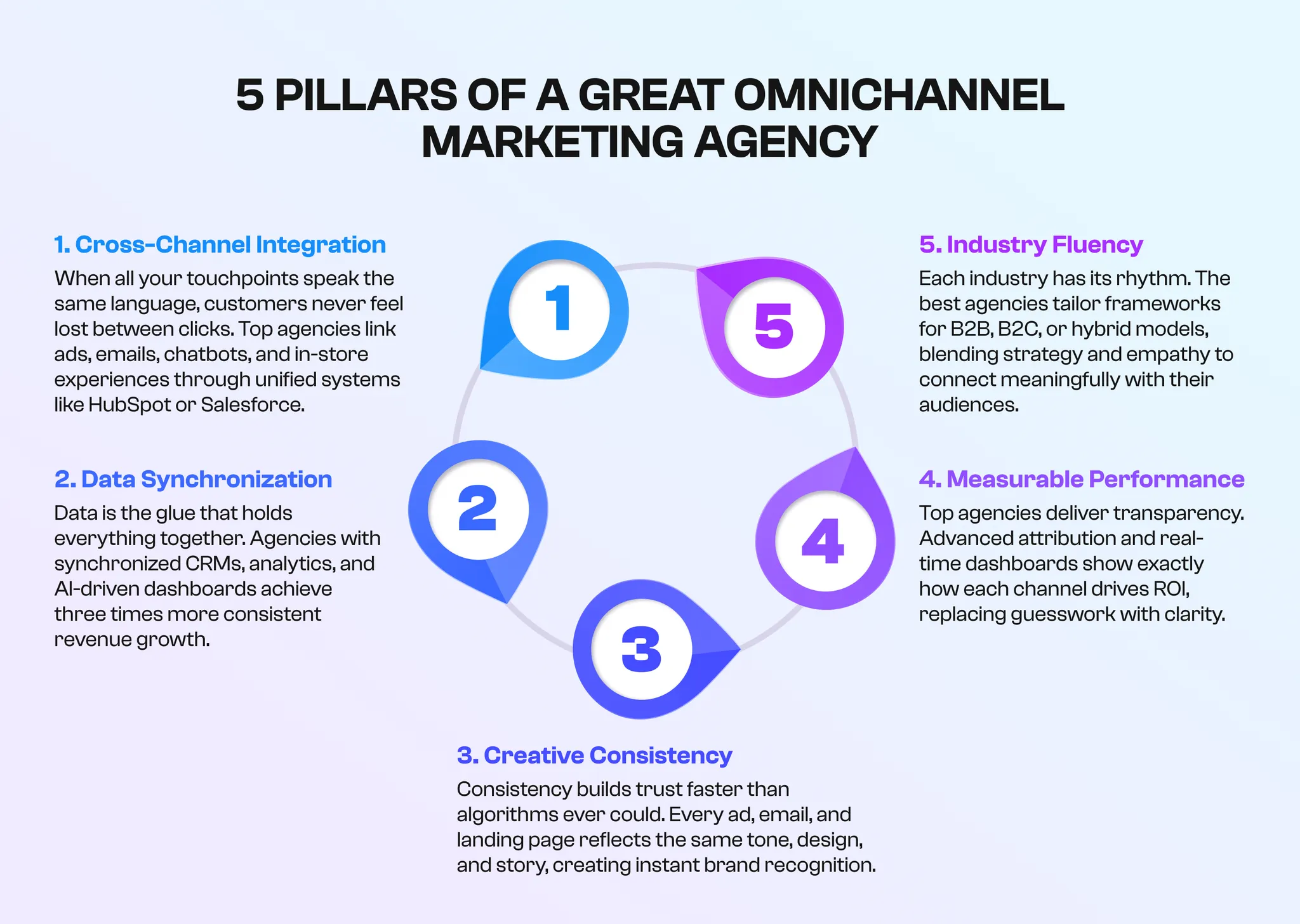
1. Cross-Channel Integration
A strong omnichannel strategy is consistently showing up. When all your touchpoints speak the same language, customers never feel lost between clicks.
Top agencies make that happen by:
- Connecting digital and offline interactions — linking ads, emails, chatbots, and in-store experiences.
- Building unified marketing stacks — syncing CRM tools like HubSpot or Salesforce with ad platforms and analytics.
- Automating data handoffs — ensuring insights from one campaign instantly refine the next.
When a marketing agency gets integration right, your customers move naturally from ad to website to follow-up email without friction. That’s when marketing stops feeling like a series of interruptions and becomes a relationship.
2. Data Synchronization
Data is the glue that keeps omnichannel together. Without connected systems, you end up with fragmented campaigns and inconsistent messaging. Companies with synchronized data systems are three times more likely to meet their revenue targets.
Great agencies focus on:
- Single sources of truth: All interactions feed into one CRM or dashboard.
- Smart analytics: AI and predictive modeling spot what’s working early, before trends shift.
- Cross-team visibility: Sales and marketing see the same data, making collaboration easier.
3. Creative Consistency
Data keeps systems talking. Creative keeps people listening. The best omnichannel agencies understand that consistency builds trust more quickly than any algorithm can.
They ensure that:
- Every ad, email, and landing page reflects the same tone, design, and story.
- Campaigns evolve without compromising the brand voice. For example, a TikTok clip still feels like it came from the same company as a white paper.
- Visual identity and emotional tone are consistently aligned across all channels, fostering instant recognition and brand consistency.
Customers notice when your brand feels cohesive. That emotional familiarity is what drives long-term loyalty.
4. Measurable Performance
Without clear attribution, omnichannel marketing becomes a matter of guesswork. The best agencies make sure every dollar spent tells a story about return on investment.
They excel by offering:
- Advanced attribution models that trace revenue back to specific touchpoints.
- Transparent dashboards where clients can see real-time metrics across all channels.
- Regular performance reviews that go beyond vanity metrics, such as impressions, to demonstrate genuine ROI.
Once you can see how a LinkedIn ad supports an email campaign or how a webinar boosts pipeline value, you start optimizing with confidence.
5. Industry Fluency
Omnichannel marketing takes a different form for every business. That’s why industry understanding matters just as much as strategy.
The best agencies adapt by:
- Designing B2B frameworks focused on nurturing, SDR alignment, and account-based campaigns.
- Building B2C playbooks centered around immediacy, storytelling, and repeat purchase behavior.
- Blending both approaches when working with hybrid businesses, like SaaS brands with self-service and enterprise buyers.
When these five pillars align, your marketing stops being reactive and starts being intelligent. The best omnichannel agencies don’t just manage campaigns; they design connected ecosystems that evolve, learn, and grow alongside your customers.
The Best Omnichannel Agencies in 2025
In 2025, omnichannel success boils down to two key factors: integration and intent. You need partners who understand how to merge creativity with data, automate without losing the human touch, and keep campaigns connected across every step of the buyer journey.
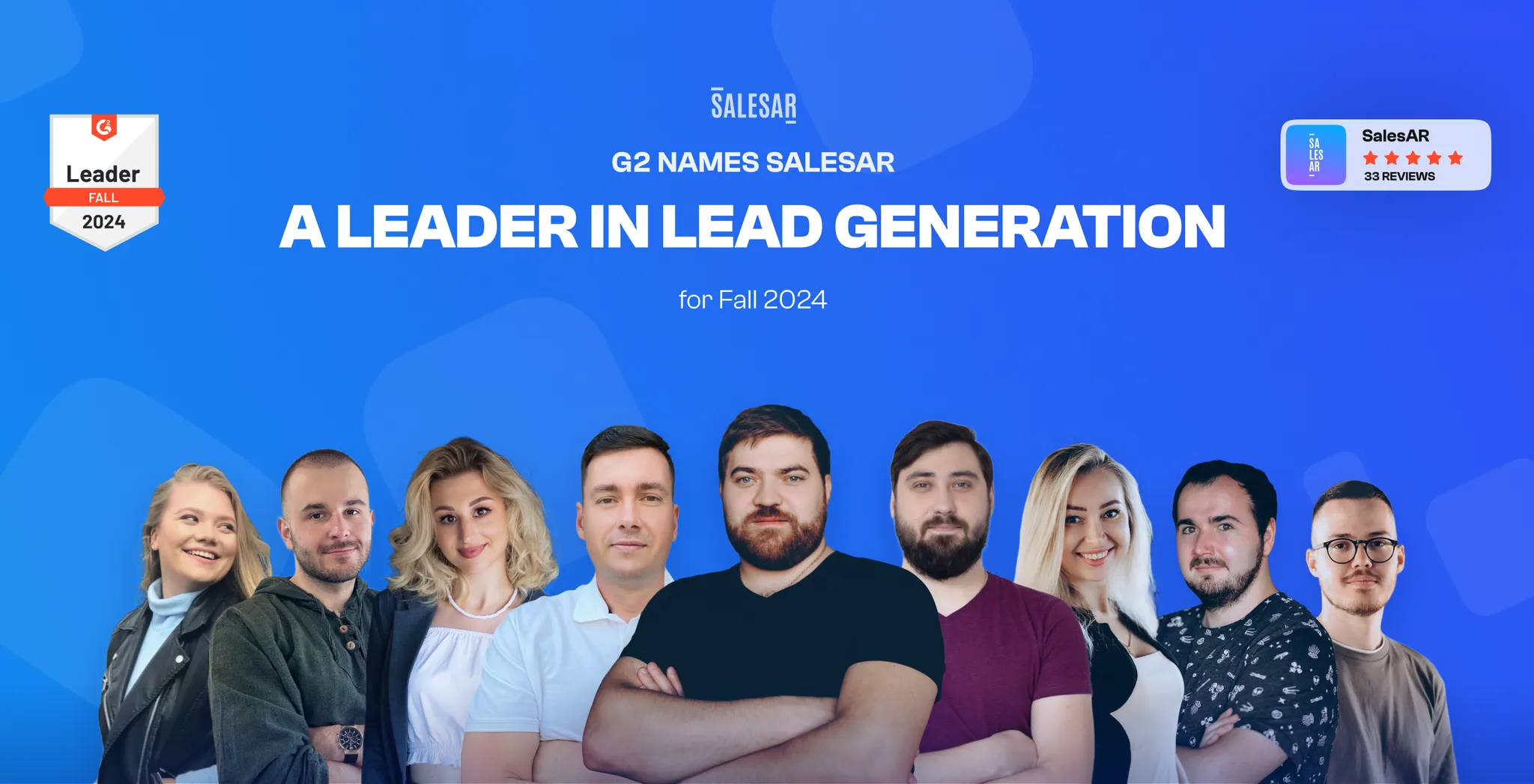
1. SalesAR
Focus: Combining human personalization, data intelligence, and multichannel outreach (LinkedIn, email, and retargeting).
Best for: SaaS, tech, and global B2B companies ready to scale qualified pipelines through data-driven omnichannel outreach.
Our omnichannel marketing strategy combines strategic data analysis, human-driven personalization, and integrated outreach across multiple touchpoints — creating full-funnel systems that not only generate leads but also open conversations.
Every campaign begins with verified data and precise targeting, developed through a prospect research process. From there, we coordinate outreach across LinkedIn, email, phone, and retargeting, ensuring each channel reinforces the next. The result is a steady, natural flow of engagement.
We manage this process end-to-end through our lead generation and appointment setting service, delivering predictable outcomes and measurable ROI. Clients typically see reply rates and meeting volumes increase by 3–5x within just a few months. Weekly reports and real-time dashboards keep every step transparent, so teams always know what’s working.
- Full-funnel execution: From ICP research to booked meetings, we handle the process end-to-end.
- Precision targeting: Every campaign starts with verified data, precise segmentation, and tailored messaging.
- Multichannel coordination: LinkedIn, email, phone, and retargeting campaigns work together in harmony, rather than competing for attention.
- Proven track record: Clients see reply rates and meeting volumes increase by 3–5x within months.
The result is consistent engagement that feels personal, not automated. By connecting outreach channels with a data-backed strategy, we help SaaS, tech, and enterprise companies build predictable, scalable pipelines that convert.
You can see these results in action in our case studies, where we’ve helped companies, from SaaS startups to global enterprises, grow their pipelines, expand reach, and book meetings with key decision-makers.

2. Belkins
Focus: Strategic outreach across multiple digital channels with measurable B2B outcomes.
Best for: Mid-to-enterprise B2B companies focused on predictable, scalable revenue acceleration through personalized omnichannel outreach.
Belkins is one of the best omnichannel marketing companies. They built their reputation on real pipeline growth. Their omnichannel method connects cold email, LinkedIn, and nurturing sequences into a single, measurable process designed to accelerate sales cycles.
Why Belkins stands out:
- Smart segmentation: Campaigns are customized to audience tiers and buying intent.
- Channel alignment: LinkedIn engagement informs email follow-ups, and vice versa, maximizing the relevance of touchpoints.
- Analytics and automation: Every sequence is tracked, refined, and scaled based on real-time data.
3. NP Digital
Focus: Omnichannel performance marketing with deep SEO + paid media alignment.
Best for: Brands seeking measurable growth through coordinated paid search, social, and organic visibility, backed by real-time ROI attribution.
NP Digital brings analytical precision to omnichannel execution. They’re experts in omnichannel marketing strategy: combining SEO, PPC, content marketing, and paid social into one high-performance system that maximizes ROI.
Why NP Digital leads the pack:
- Unified analytics: Every channel feeds into one performance dashboard.
- Organic + paid alignment: SEO insights directly influence paid targeting and messaging for faster scaling.
- ROI-first mindset: Campaigns are continuously optimized for acquisition cost, not just impressions.
- Global execution: They manage omnichannel campaigns across continents with a consistent brand voice and strategy.
Their most significant strength is visibility: clients can see, in real time, how a keyword drives traffic, how that traffic converts, and how it contributes to total revenue. It’s end-to-end performance tracking that most agencies only promise.

4. Single Grain
Focus: Blends content marketing, PPC, and funnel optimization into one system.
Best for: SaaS, eLearning, and tech companies seeking a balance between inbound and outbound omnichannel presence.
Single Grain is built around one clear principle: inbound and outbound shouldn’t compete; they should amplify each other. This marketing agency has mastered the art of aligning organic and paid strategies, using content as the connective tissue between discovery, engagement, and conversion.
Why Single Grain stands out:
- SEO and PPC alignment: Their campaigns strike a balance between long-term organic visibility and immediate paid growth.
- Content-led funnels: Blog content, ads, and landing pages work together to guide users through the funnel.
- ROI transparency: Every click and keyword is tracked across touchpoints to measure real business impact.
- Scalable systems: They adapt easily to SaaS and tech growth models, where acquisition costs and retention both matter.
Their model is compelling for brands that need awareness and performance in equal measure — not just ranking in search, but converting those visitors into customers through cohesive multi-channel journeys.
5. Catalyst Digital
Focus: Integrated marketing strategies that unify SEO, paid media, and analytics.
Best for: Enterprises seeking consistent global visibility through tightly aligned brand and performance strategies.
Catalyst Digital has long been a trusted marketing agency for enterprise brands that need to connect large-scale visibility with measurable performance. They’re known for helping global companies align their brand story and digital execution across every platform.
Why Catalyst Digital stands out:
- Strategic alignment: Paid, organic, and social campaigns reinforce the same brand narrative.
- Global scalability: Proven experience managing multilingual and multi-regional campaigns for global enterprises.
- Deep analytics: Advanced reporting connects creative decisions to financial results.
- Balance of brand and performance: Helps brands grow awareness while maintaining clear conversion metrics.
Their omnichannel marketing strategy centers on developing long-term, cohesive systems that are consistent across multiple markets. Perfect for enterprises that need both reach and consistency without compromising control of data or messaging.
6. Percepture
Focus: Seamlessly integrates PR, digital, and offline channels.
Best for: Enterprises managing both digital and traditional media, where reputation and performance need to move in sync.
Percepture sits at the intersection of storytelling and performance. The agency specializes in unifying brand communications across paid, earned, and owned media. Whether it’s a press release, a digital campaign, or a conference keynote, the message stays consistent and measurable.
Why Percepture stands out:
- Unified communications: Bridges PR, social, and digital marketing for consistent storytelling.
- Crisis-ready structure: Strong reputation management and corporate communications expertise.
- Performance mindset: Uses analytics to track how narrative-driven campaigns translate into engagement and revenue.
- Integrated teams: PR pros, digital strategists, and creatives collaborate under one roof for total alignment.
Percepture is ideal for enterprises balancing both corporate reputation and growth. Their omnichannel marketing strategy ensures that a brand’s voice reaches not only audiences but also resonates across every medium.

7. R/GA
Focus: Technology and design integration across global brand experiences.
Best for: Large enterprises and experience-led brands looking to merge creative storytelling with cutting-edge innovation.
R/GA remains one of the pioneers of connected brand ecosystems, where creativity, innovation, and digital transformation intersect. Their work seamlessly blends storytelling with technology, enabling brands to design experiences that connect with audiences on both emotional and functional levels across markets.
Why R/GA stands out:
- Experience design expertise: Integrates UX, content, and interactive technology into unified customer journeys.
- Innovation-driven: Constantly experimenting with AI, AR, and data personalization to elevate brand engagement.
- Cross-market strategy: Supports global enterprises with localization that preserves brand identity.
- Creative and analytical balance: Every design decision is supported by data and user insight.
Their approach turns omnichannel marketing into a long-term brand infrastructure where every interaction feels intentional and connected.
How to Choose the Right Omnichannel Partner
The best omnichannel partner fits your goals, speaks your industry’s language, and integrates seamlessly with your internal team. Here’s what to look for when making your choice:
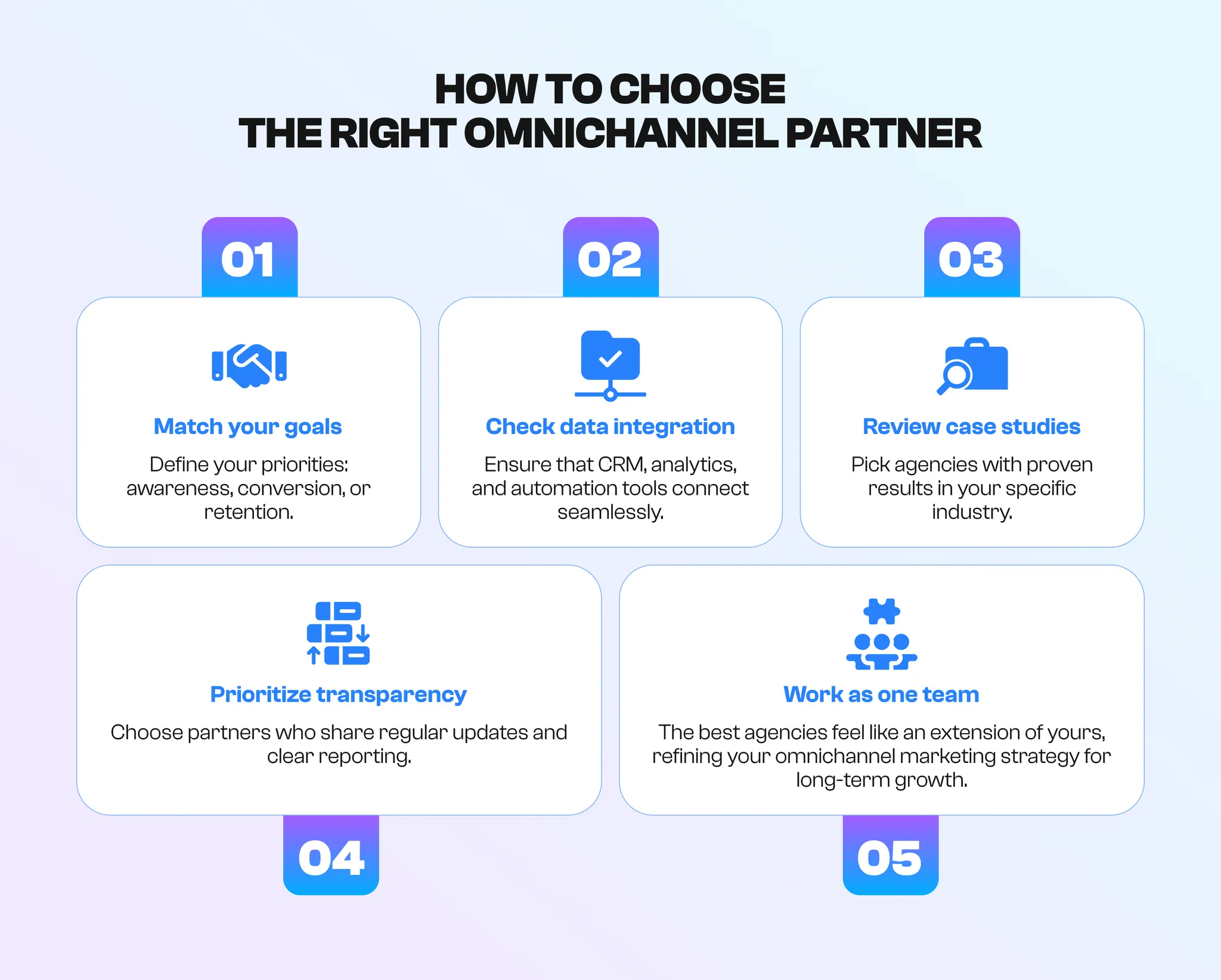
- Match your goals. Start by clarifying what you’re really aiming for: awareness, conversion, or retention. A retail brand focused on visibility needs a different strategy than a SaaS company focused on qualified demos.
- Evaluate data integration capabilities. Your CRM, analytics, and automation platforms should all be part of the same ecosystem. Ask potential partners how they connect these tools — whether through HubSpot, Salesforce, Google Analytics 4, or a marketing cloud.
- Look for proven case studies in your specific industry. It’s one thing to build awareness for a DTC skincare brand and another to drive enterprise B2B leads. Agencies with proven experience in your industry already understand audience behavior, compliance nuances, and channel efficiency.
- Prioritize transparency and reporting. The strongest partnerships run on visibility. Choose an agency that shares regular updates, uses transparent dashboards, and communicates with a clear cadence. Weekly check-ins keep both teams aligned and proactive.
- Treat them as part of your team. The best omnichannel partners share accountability. They’ll challenge your assumptions, bring fresh ideas, and help evolve your strategy as your audience and goals grow.
When you find an agency that feels like an extension of your own team, you’ve found a growth partner — one that helps you build and refine your omnichannel marketing strategy so every campaign, channel, and touchpoint works together toward the same goal.
Conclusion
The future belongs to companies that treat every channel as part of a shared experience — one that is relevant, human, and continuous. Because in the end, omnichannel marketing isn’t just a strategy. It’s a lasting commitment to connection.
Book a call with SalesAR and see how our omnichannel approach can help you turn conversations into conversions.
FAQ
What is omnichannel marketing?
Omnichannel marketing is an approach that connects all your marketing and sales channels, both digital and physical, into one seamless customer experience. Instead of treating email, social media, ads, or retail as separate efforts, everything works together so the audience sees one consistent message across every interaction.
How does omnichannel differ from multichannel marketing?
Multichannel marketing involves utilizing multiple channels simultaneously, including LinkedIn, email, and Google Ads. Omnichannel marketing takes it further by integrating those channels, ensuring that data, messaging, and timing align across them. It is the difference between being present everywhere and being connected everywhere.
What industries benefit the most from omnichannel strategies?
Almost every industry can benefit from an omnichannel approach, but it is especially effective in B2B, SaaS, eCommerce, retail, finance, and education. For B2B and SaaS, omnichannel systems help align marketing automation with SDR outreach. For consumer-facing brands, it ensures consistency between online engagement and in-store experiences.
How can businesses choose the right omnichannel agency?
Look for an agency with a proven track record in your industry, strong data integration capabilities, and transparent reporting. The right partner will help you design a comprehensive omnichannel marketing strategy that aligns with your audience, technology, and growth objectives.