










I remember talking to a SaaS founder who had a brilliant product and a team of sharp sales reps. The only problem? Their calendars were painfully empty. The inboxes were full of unqualified leads, follow-ups fell through the cracks, and the sales team spent half their time chasing replies instead of closing deals.
Then came the turning point: he realized his closers shouldn’t be prospecting full-time. The solution was to bring in someone who could consistently fill the top of the funnel.
What B2B Appointment Setters Really Do
Their job is to open doors. Think of them as the bridge between your lead generation and sales team. These kind of experts spend their days doing the outreach your closers don’t have time for:
- Sending personalized cold emails that don’t sound robotic.
- Making discovery calls to confirm fit.
- Following up with prospects who showed interest but never booked.
- Keeping your CRM clean and organized so your sales team can focus on selling.
Consistent appointment setting keeps your brand visible and ensures no qualified lead slips away because “no one had time to follow up.”
Why Great Appointment Setters Are Growth Multipliers
Here’s something I’ve seen again and again: once you bring in a skilled expert, the whole sales engine starts to move faster. Companies that add one appointment setter for every two closers see a 25% boost in overall pipeline velocity.
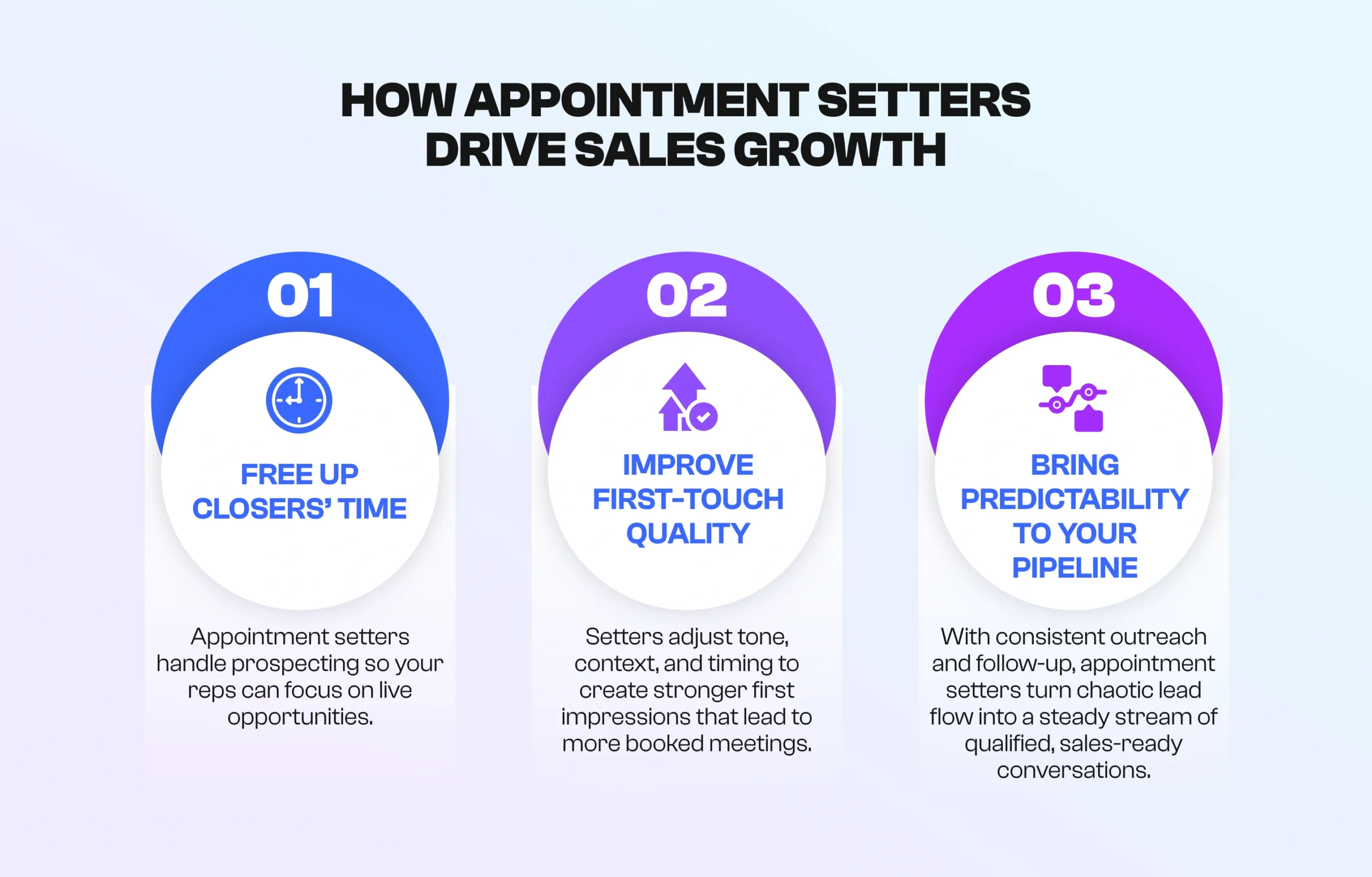
- They free up closers’ time. When your sales reps stop chasing cold leads and start focusing on live deals, productivity lifts by 30–40%.
- They improve first-touch quality. A great setter personalizes appointment setting to your ICP, adjusts tone per industry, and builds familiarity before the meeting even happens.
- They bring predictability to your pipeline. Instead of relying on random bursts of activity, your outreach becomes a constant process.
You stop guessing where the next deal will come from and start seeing a steady flow of sales-qualified conversations.
Where to Find Top B2B Appointment Setters
If you’ve ever tried to hire for this role, you already know that finding a good appointment setter is trickier than it sounds. You can’t just grab someone who “likes talking to people” and expect your pipeline to flourish. It takes persistence, empathy, structure, and sales intuition. But when you find the right person, the payoff is massive.
So, where do you look? The best approach depends on your stage, budget, and goals. Let’s break down the most effective sourcing routes and what each offers.
1. Freelance Platforms and Job Boards
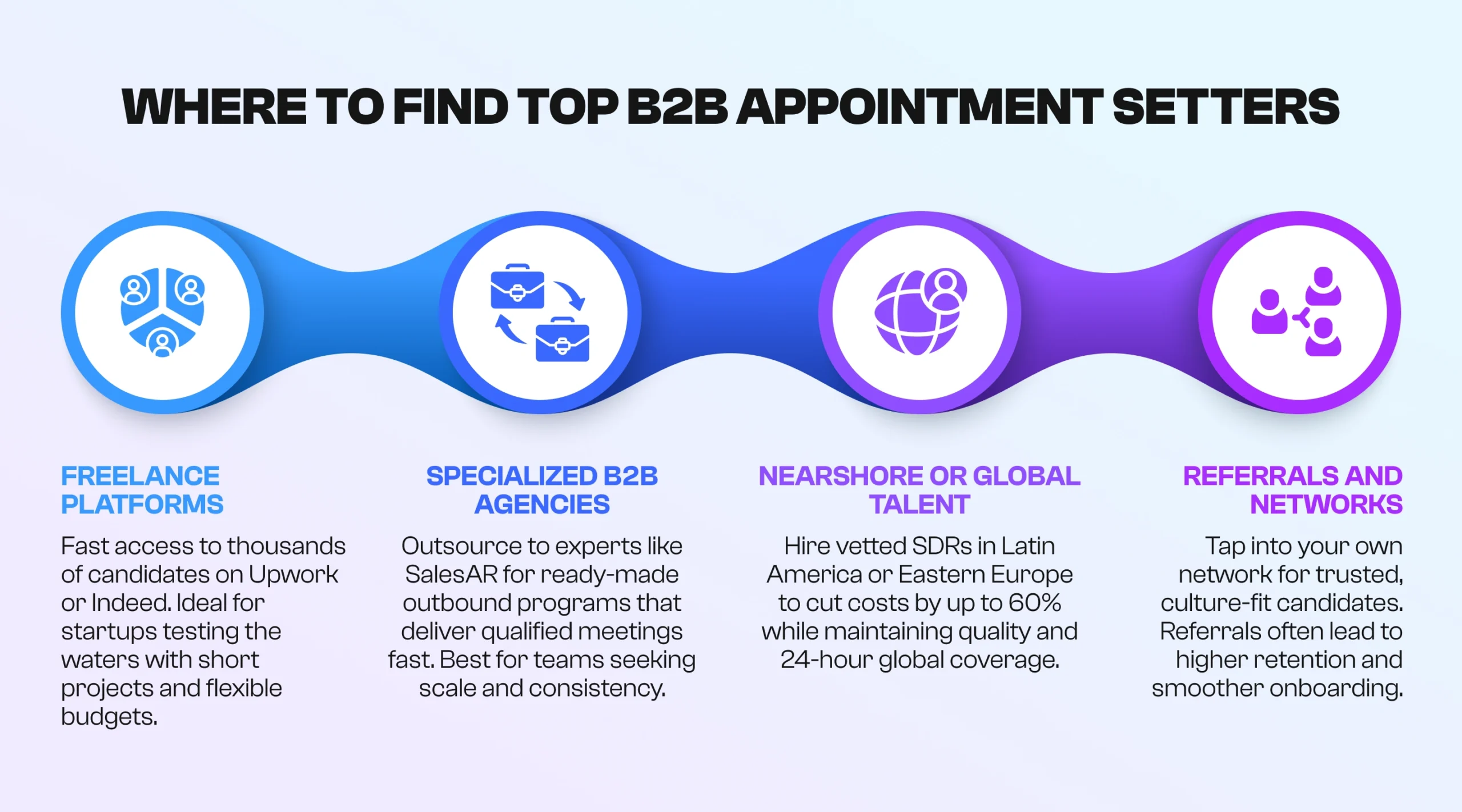
Platforms like Upwork, LinkedIn, and Indeed are the fastest way to start the search. You’ll find thousands of candidates listing “B2B appointment setting” as a skill — but the real challenge is filtering for quality.
Look for profiles that show:
- Experience in outbound B2B lead generation (not just customer support or marketing).
- Familiarity with tools like HubSpot, Instantly, Apollo.io, or LinkedIn Sales Navigator.
- A track record of booking meetings with decision-makers, not just collecting emails.
These platforms work best if you have a solid onboarding plan and can test candidates quickly with short trial projects. For early-stage startups, this is often the easiest way to get started without long-term commitments.

SalesAR Insight: Post your job in niche communities where outbound professionals hang out. The candidates you’ll find there usually understand the nuances of B2B appointment setting far better than generic freelancers.
2. Specialized B2B Agencies
If you want a plug-and-play solution, consider working with an outsourced appointment setting agency. Firms like SalesAR, Belkins, and Martal Group specialize in building and managing outbound programs that deliver qualified, sales-ready meetings.
These teams handle data research, outreach strategy, messaging, and performance reporting. They already know what works in your niche, which channels to use, and how to reach the right decision-makers.
The cost may seem higher upfront, but the return comes from saved time and consistency. A strong agency partner can start producing results within a few weeks, while hiring in-house may take months of training and adjustment.
At SalesAR, we’ve seen firsthand how much time and effort this saves growing companies. Our clients — from SaaS startups to enterprise tech providers — rely on our appointment setters to handle research, personalized multichannel outreach, and lead qualification so their closers can focus purely on conversations that convert.
With more than 600+ B2B clients globally, we’ve refined a process that blends strategy, personalization, and transparency. Each campaign includes ICP research, outreach, and transparent performance reporting. On average, our clients see results within 3–4 weeks, with reply rates above 7% and pipelines that stay consistently full.
Explore our case studies for real results, strategies, and client feedback.
3. Nearshore or Global Talent
Hiring beyond your local market can unlock exceptional talent at a fraction of the cost. Platforms like HireWithNear or RemotelyTalents connect you with vetted sales professionals in regions such as Latin America and Eastern Europe, where English proficiency and sales expertise are impressively high.
The math speaks for itself: companies that build nearshore SDR and appointment setting teams reduce costs by up to 60% without compromising on quality, when onboarding and playbooks are well-structured.
This approach works well for outbound campaigns across multiple time zones. For example, a U.S. company can have Latin American setters covering early morning outreach, while Eastern European setters manage later shifts, creating almost 24-hour coverage.
4. Internal Referrals and Network Hiring
Never underestimate the power of your own network. Some of the best appointment setters come through internal referrals — often from employees who’ve worked with them before or from trusted connections in sales communities.
Referrals tend to yield a better culture fit, higher retention, and smoother onboarding because they already come pre-vetted by someone who understands your work style. Consider incentivizing your team with small bonuses for referred hires who stay beyond the first 90 days.
Even if you don’t have referrals right away, tap into your network. Reach out to sales leaders, agency owners, or LinkedIn connections in similar industries. A single message can open the door to strong candidates or even ready-made partnerships.
What to Look for in a Strong Candidate
Once you’ve narrowed down where to search, the next question is: how do you know if someone’s truly good at this job? The best appointment setters are strategic communicators who can turn silence into engagement and rejection into opportunity.
Here’s what to look for when hiring:
- Excellent communication and objection-handling skills. They need to hold conversations that sound human, not scripted. A strong setter knows how to handle classic brush-offs like “I’m not interested” or “We’re already working with someone” without sounding pushy. Listen for confidence, clarity, and how naturally they can pivot.
- Empathy, curiosity, and resilience. Appointment setters hear “no” more than any other sales role — sometimes 50 times a day. The best ones don’t take it personally. They stay curious, ask better questions, and use rejection as a form of feedback.
- Familiarity with CRM tools and automation. Look for candidates who can manage HubSpot, Salesforce, or Pipedrive without getting lost in the process. Bonus points if they’ve used appointment setting tools like Instantly, Apollo, or Lemlist.
- Understanding of ICP and personalization. A professional setter should be able to explain who your ideal customer is and why. Ask how they would tailor outreach for a SaaS company versus a logistics firm. Their answer will tell you whether they think strategically or just copy templates.

SalesAR Insight: Always include a short task in your interview process. Something as simple as: “Write a follow-up email to a cold prospect who didn’t respond in 3 days.” You’ll see instantly whether they understand tone, structure, and persuasion. A strong candidate will write something concise, friendly, and specific.
How to Evaluate and Interview Appointment Setters
Hiring an appointment setter is about finding a person who can handle rejection, think on their feet, and stay human in every conversation. The interview process should reveal how they communicate, adapt, and organize their work.
Pre-Screening: Clarity and Warmth
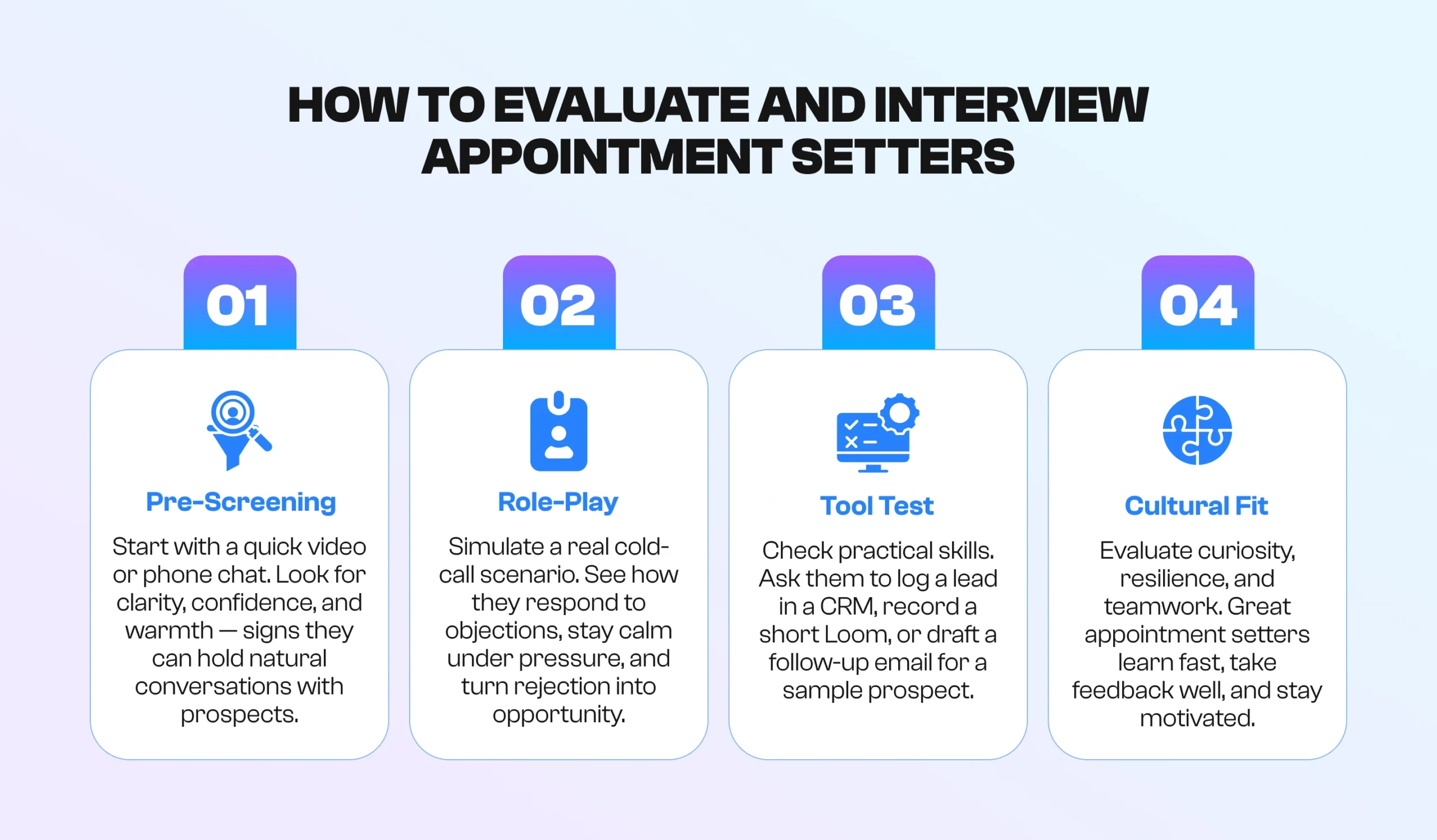
Start with a short call or video chat. You’ll know within minutes if they can engage naturally. Listen for:
- Clarity: Can they explain things simply and confidently
- Warmth: Do they sound genuine, not robotic?
Ask open questions like, “How do you handle prospects who go silent?” or “What do you enjoy most about appointment setting?” Their tone and curiosity will tell you a lot about fit.
Role-Play Exercises
Run a short scenario — for example, a cold call with a “no time” objection. You’re testing tone and adaptability, not memorized lines.
The best appointment setters turn rejection into feedback. Watch for candidates who stay calm, ask questions, and try to understand the prospect’s hesitation instead of freezing up.
Tool Test
Practical skills matter as much as charm. Ask candidates to:
- Record a Loom video explaining how they’d manage a prospect list.
- Log a sample lead or note in your CRM.
- Write a short follow-up email sequence for a mock ICP.
Cultural Fit
The best experts are curious, resilient, and coachable. During your final chat, ask: “How do you stay motivated when most people say no?”
Look for someone who treats rejection as insight and feedback as fuel. If they talk about testing, collaboration, or improving their scripts, you’ve likely found a winner.
Conclusion
A strong setters know how to listen, personalize, and build trust long before a deal hits the table. They turn cold data into warm introductions, and they give your sales team the one thing money can’t buy: time to focus on real opportunities.
FAQ
What does a B2B appointment setter do?
A B2B appointment setter bridges the gap between marketing and sales. They handle outreach to connect with potential buyers, qualify them against your ideal customer profile (ICP), and schedule meetings for your sales team. Their goal isn’t to close deals but to create consistent, sales-ready opportunities that move your pipeline forward.
How do I know if my business needs an appointment setter?
If your closers spend more time prospecting than selling, or if your pipeline fluctuates month to month, it’s time to bring in an appointment setter. They keep lead generation steady, freeing up your sales reps to focus on conversions and customer relationships. Many growing B2B teams find that even one setter supporting two closers can increase overall pipeline velocity by 25%.
What skills should I look for in a B2B appointment setter?
Strong communication and objection-handling skills are essential. Look for empathy, curiosity, and resilience. Technical familiarity also matters: they should be comfortable with CRM systems, email automation, and lead research tools. Most importantly, they should understand your ICP and know how to tailor appointment setting to different audiences.
How much does it cost to hire a B2B appointment setter?
Pricing varies by model and region. In-house setters in North America typically earn between $3,500–$6,000/month, while nearshore or global talent (e.g., Latin America, Eastern Europe) can cost 30–60% less with comparable quality if training and processes are solid.