










For many MSPs, lead generation feels uneven. One month, the pipeline looks healthy. Next, you are looking at a few weak inquiries, a couple of referrals, and a sales team asking: Where are the real opportunities coming from?
That pressure is growing for a reason. The managed services market keeps expanding, which means demand is there, but competition is getting tighter, too. Grand View Research estimates the global managed services market reached $401.15 billion in 2025 and projects it to grow to $847.41 billion by 2033.
At the same time, B2B buyers are doing more research before they ever speak to a provider. Gartner reported that 61% of B2B buyers prefer a rep-free buying experience, while 73% actively avoid suppliers that send irrelevant outreach.
That is exactly why managed services lead generation needs a more structured approach now. If you want a predictable pipeline, you need a system that helps you attract the right accounts, properly qualify them, and move them toward a real sales conversation.
Why Lead Generation Is So Hard for MSPs
The real issue is that demand is inconsistent, buyer intent is mixed, and many teams lack a system that converts interest into qualified sales conversations.
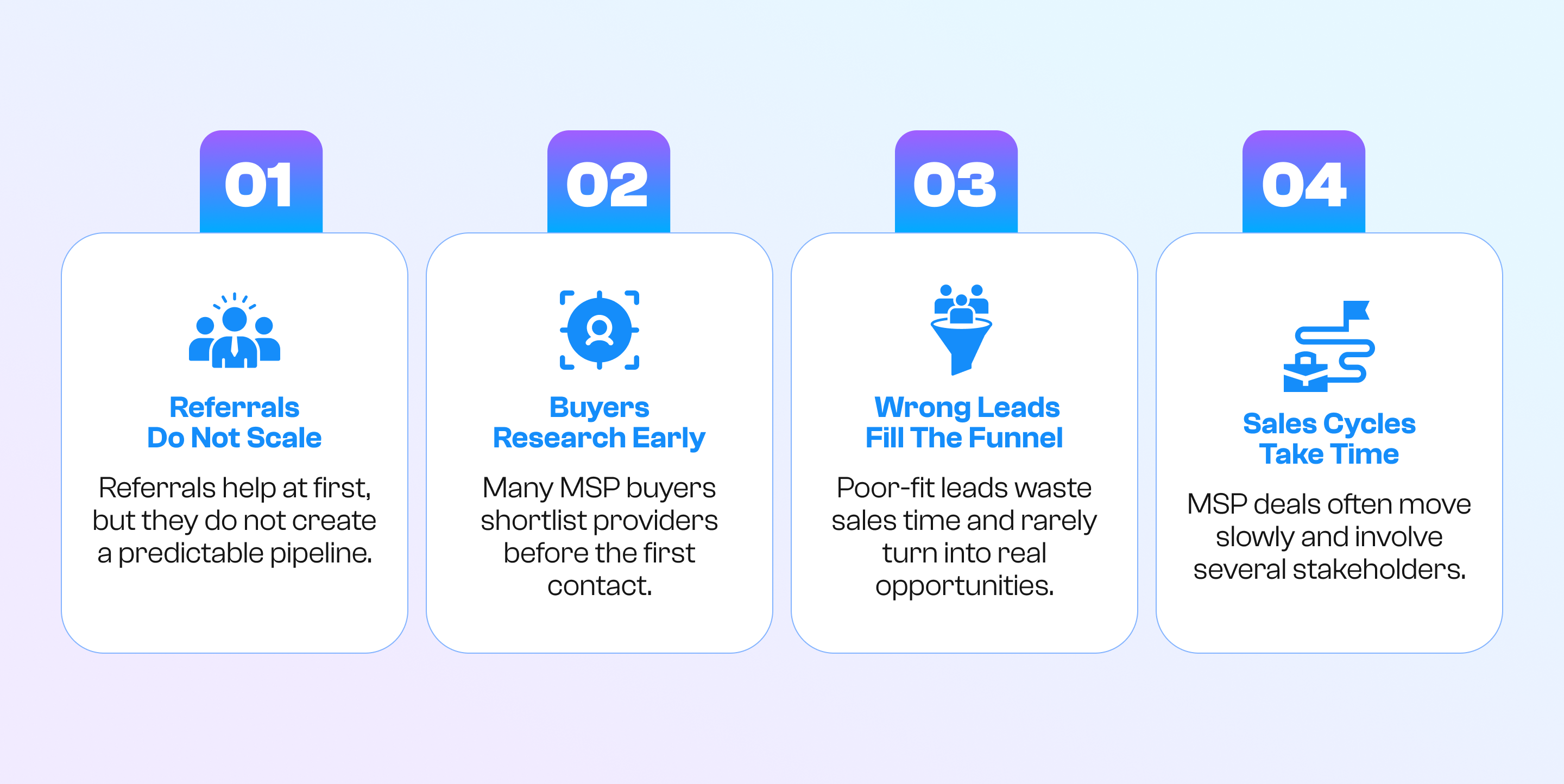
1. Referrals Do Not Scale
A few strong client relationships bring introductions, word of mouth does some of the work, and the business grows without a formal lead-gen engine in place.
That works for a while. Then referrals slow down, and the gap becomes obvious. You may have a good service, a solid team, and happy clients, but your pipeline still depends on factors you cannot control.
That usually creates a few problems:
- Lead volume changes from month to month
- Sales planning gets harder
- Growth depends too much on past clients
- There is no clear way to scale acquisition
2. Buyers Research
Prospects are comparing providers, reading case studies, checking service pages, and forming opinions long before they fill out a contact form. If your positioning does not clearly explain how you help them, that early research stage starts working against you. In many cases, buyers already have a favored vendor before engaging sales.
What does that mean for MSPs?
- Your website has to do more of the selling earlier
- Your content has to answer real buyer concerns
- Your messaging has to connect technical services to business outcomes
- Your brand has to build trust before the first call happens
3. Wrong Leads Fill The Funnel
This is one of the most frustrating parts of lead generation. You may be getting form fills, booked calls, or campaign replies, but the leads go nowhere.
Sometimes they are too small. Sometimes they want break-fix support instead of a managed services contract. Sometimes they are outside your target vertical or are simply not ready to buy.
Common signs of this problem include:
- Discovery calls with no real buying intent
- Leads that do not match your service model
- Long follow-up with little progress
- Low close rates despite decent top-of-funnel activity
4. Sales Cycles Take Time
MSP deals can take time, especially when the offer touches infrastructure, security, compliance, cloud migration, or fully outsourced IT support. A buyer may show interest today and still need internal approvals, stakeholder buy-in, or a contract review process before moving forward.
A longer sales cycle usually means you need:
- Consistent follow-up
- Nurture content that keeps the conversation warm
- Proof points such as case studies and service outcomes
- Clear qualification so sales can focus on real opportunities

SalesAR Insight: Companies with strong lead nurturing programs generate 50% more sales-ready leads at 33% lower cost.
The Core Elements Of MSP Lead Generation
Many teams treat lead generation as a traffic problem. More clicks, more form fills, more email replies. Sounds logical, right?
Still, none of that means much on its own if the people landing on your site are not the kind of buyers you want to work with. An MSP can drive hundreds of visits and still walk away with weak pipeline results if the offer is too generic.
That is why lead generation should be judged by questions like:
- Are the MSP leads relevant to your services?
- Do they match your target company size or industry?
- Are they looking for ongoing support rather than one-off help?
- Is there a real business problem behind the inquiry?
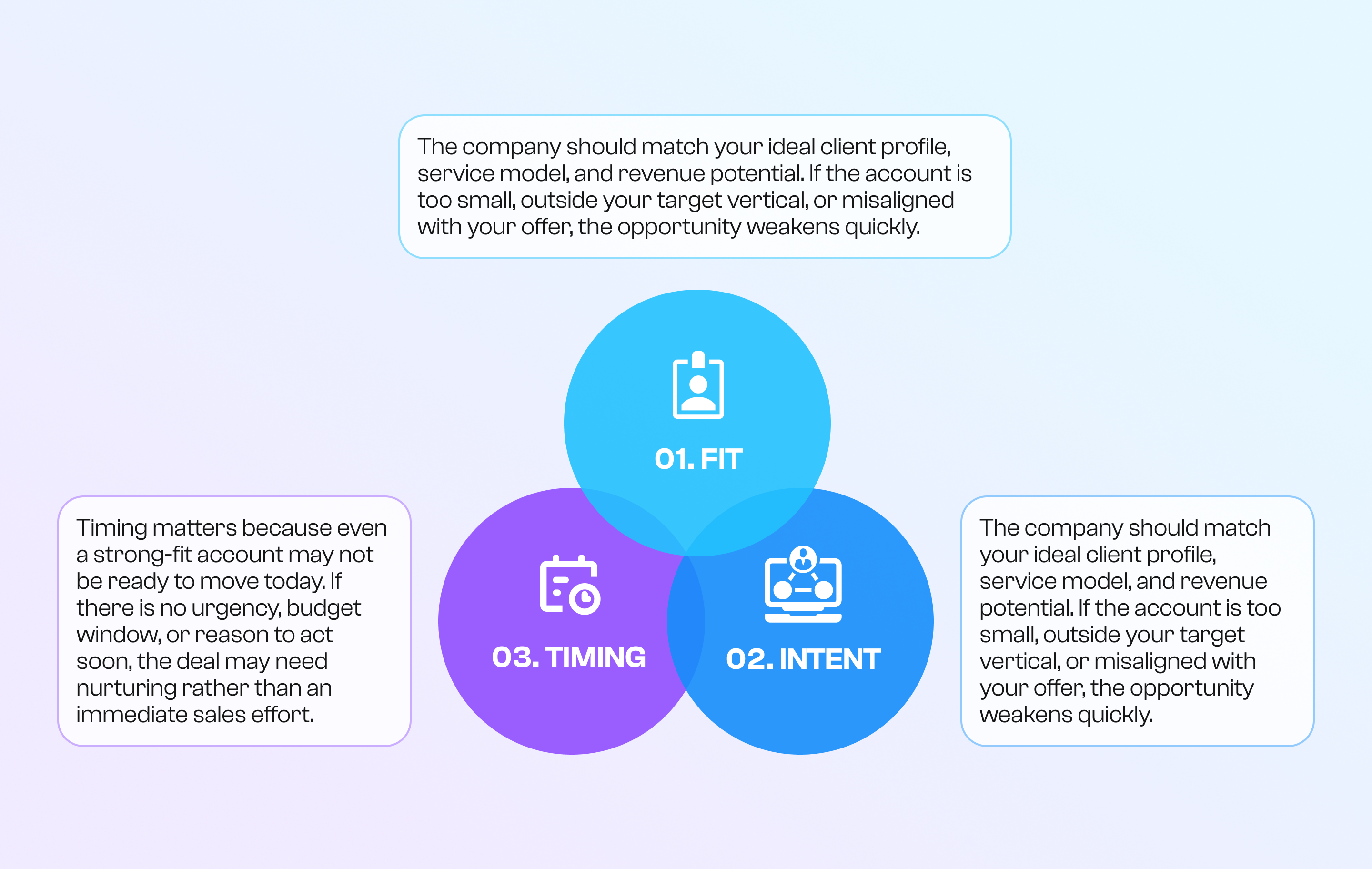
This is where MSP lead generation becomes practical. A strong lead is usually a mix of three things:
- Fit — the company matches your ideal client profile
- Intent — there are signs they are actively looking for a solution
- Timing — there is enough urgency to move the conversation forward
Miss one of these, and the opportunity gets weaker.
You might find a company that fits your ICP perfectly, but they are locked into a provider for another 10 months. Or you might get interest from a company that wants help right away, but the scope is too small to make sense for your team.
MSP lead generation needs a qualification built into it from the start. The goal is to understand which accounts are worth a deeper sales effort now, which need nurturing, and which are not a fit.
Start With The Right ICP
Lead generation MSP problems start before the first campaign goes live. The outreach may be polished. The landing page may look good. The offer may sound solid. Still, the results stay weak.
Why does that happen? Because the targeting is too broad.
If you are trying to speak to everyone who might need IT support, your message gets watered down fast. The strongest MSP campaigns usually start with a sharper question: who exactly are we trying to win, and why are they likely to choose us?
Define Your Ideal Client Profile
Your ICP should be a practical filter that helps you focus on accounts that are more likely to convert, stay longer, and generate healthy revenue. For MSPs, that usually means looking at factors like:
- Company Size
- Industry
- Geographic Focus
- Internal IT Maturity
- Compliance Requirements
- Average Contract Potential
- Service Needs
- Growth Stage
For example, an MSP that works best with 50–200 employee healthcare companies should not use the same messaging as one targeting multi-location retail businesses or law firms with strict compliance expectations.

SalesAR Insight: Read our ICP guide to learn how to define better-fit accounts and build MSP campaigns around buyers with stronger revenue potential.
Break Down Pain Points By Segment
This is where many MSPs stay too generic. They talk about “reliable IT support” or “better security” as if every buyer hears those promises the same way. They do not.
A law firm, a logistics company, and a healthcare provider may all need managed IT services, but the reasons they start looking are very different.
A few examples:
- A healthcare company may worry about compliance, uptime, and data protection
- A manufacturing business may care more about network stability across locations and reduced downtime
- A professional services firm may want tighter endpoint security and faster employee support
- A growing SMB may need co-managed IT because the internal team is overloaded
When you map pain points by segment, your campaigns become much easier to write. You stop listing services and start talking about the actual problems buyers want solved.
Clarify Your Value Proposition
Once the ICP is clear, the next step is to explain why your MSP is the right fit for that audience. This is where a lot of companies fall back on generic lines like:
- We provide reliable support
- We offer end-to-end IT services
- We help businesses stay secure
The problem is that nearly every MSP says some version of that. A stronger value proposition connects your service to a clear buyer outcome. For example, instead of saying you provide managed IT services, you might frame the value around:
- Faster resolution times for distributed teams
- Better compliance readiness for regulated industries
- Less downtime during cloud migration
- Stronger security oversight for lean internal IT teams
In MSP sales, there often are multiple people involved in the decision. That means your messaging should reflect different value propositions. A founder may care about cost control. An operations leader may focus on reliability. A compliance stakeholder may look at risk and documentation.
When your ICP, pain points, value proposition, and decision-maker messaging all line up, lead generation for MSPs becomes much easier to scale. You spend less time chasing weak-fit leads and more time speaking to companies that already look like strong potential clients.
Turn Your Offer Into A Hook
The targeting may be solid, but the offer is too broad, safe, or easy to ignore. A generic “Book A Call” or “Contact Us” message rarely creates enough urgency on its own, especially if the buyer is still comparing options. A stronger offer gives the prospect a reason to act now. It makes the next step feel useful, low-friction, and relevant to a real business problem.
Make The Offer Specific
Specific offers usually outperform broad ones because they are easier to understand and easier to trust.
Compare these two examples:
- Book A Free Consultation
- Get A 20-Minute Security Review
The second one works better because the buyer instantly understands what they are getting and why it may matter.
For MSPs, strong offers often focus on one defined issue, such as:
- Free IT risk assessment
- Network security review
- Backup and disaster recovery check
- Cloud cost optimization audit
- Co-managed its consultation
- Compliance readiness review
A specific offer also helps pre-qualify interest. Someone who responds to a cybersecurity assessment is telling you more about their priorities than someone who clicks a general contact button.
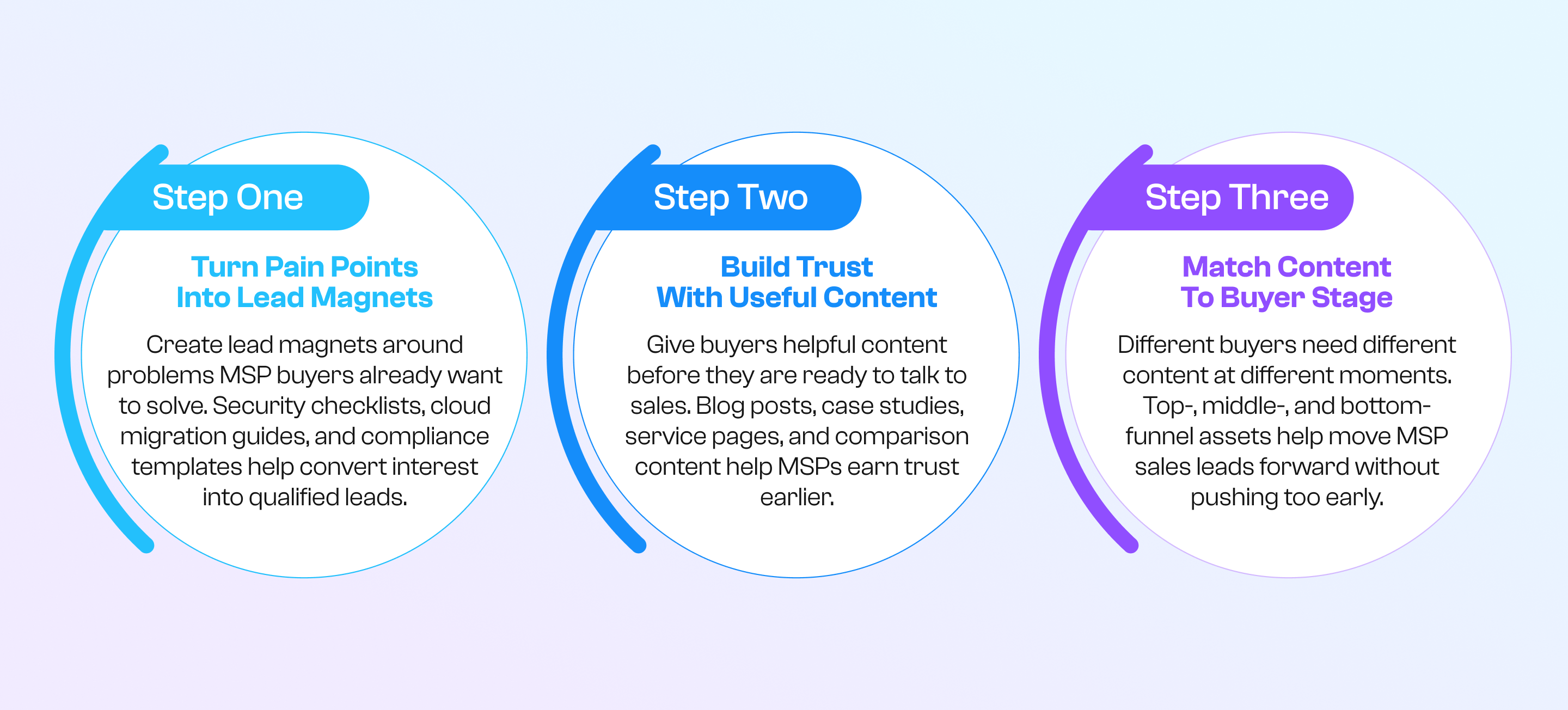
Use Content And Lead Magnets
Not every MSP buyer is ready to book a call the first time they land on your site. Some are still comparing providers. Some are trying to better understand the problem. Some know they need help, but they are not ready to talk to sales yet.
Instead of pushing every visitor toward a consultation, you give them a useful next step. Something that helps them solve part of the problem while also pulling them into your funnel.
Turn Pain Points Into Lead Magnets
A stronger lead magnet is tied to a clear problem your target audience already cares about. It feels useful enough to exchange contact details for, and specific enough to help you understand what kind of lead is coming in.
For MSPs, common formats include:
- Its security checklists
- Backup and disaster recovery templates
- Cloud migration planning guides
- Cybersecurity readiness assessments
- Compliance preparation checklists
- Cost optimization worksheets
- Vendor evaluation guides
The best lead magnets usually sit close to a buying trigger. If a company downloads a cloud migration checklist, there is a decent chance cloud change is already on the table. If they request a security assessment template, risk and compliance may already be a priority.
Create Content That Builds Trust Earlier
Content helps MSPs show expertise before sales get involved. That matters because buyers usually do research long before they are ready to speak with a provider.
A good content mix gives prospects answers at different stages of that process. That may include:
- Blog articles that explain common IT, security, or compliance challenges
- Case studies that show outcomes in similar environments
- Service pages built around specific problems
- Industry pages for segments like healthcare, legal, finance, or manufacturing
- Comparison content for buyers weighing different options
- Email content that supports nurture and follow-up
This is not about publishing for the sake of staying active. It is about ensuring buyers can find useful, relevant information when evaluating providers.

SalesAR Insight: Demand Metric reports that 47% of buyers view three to five pieces of content before engaging with a salesperson, which aligns closely with how B2B MSP buyers tend to research solutions.
Match Content To Funnel Stage
Treating every content asset the same is one of the fastest ways to weaken strategy. The best lead generation strategies for MSPs 2026 usually take the opposite approach, matching content to the buyer stage.
A simple funnel-based structure helps.
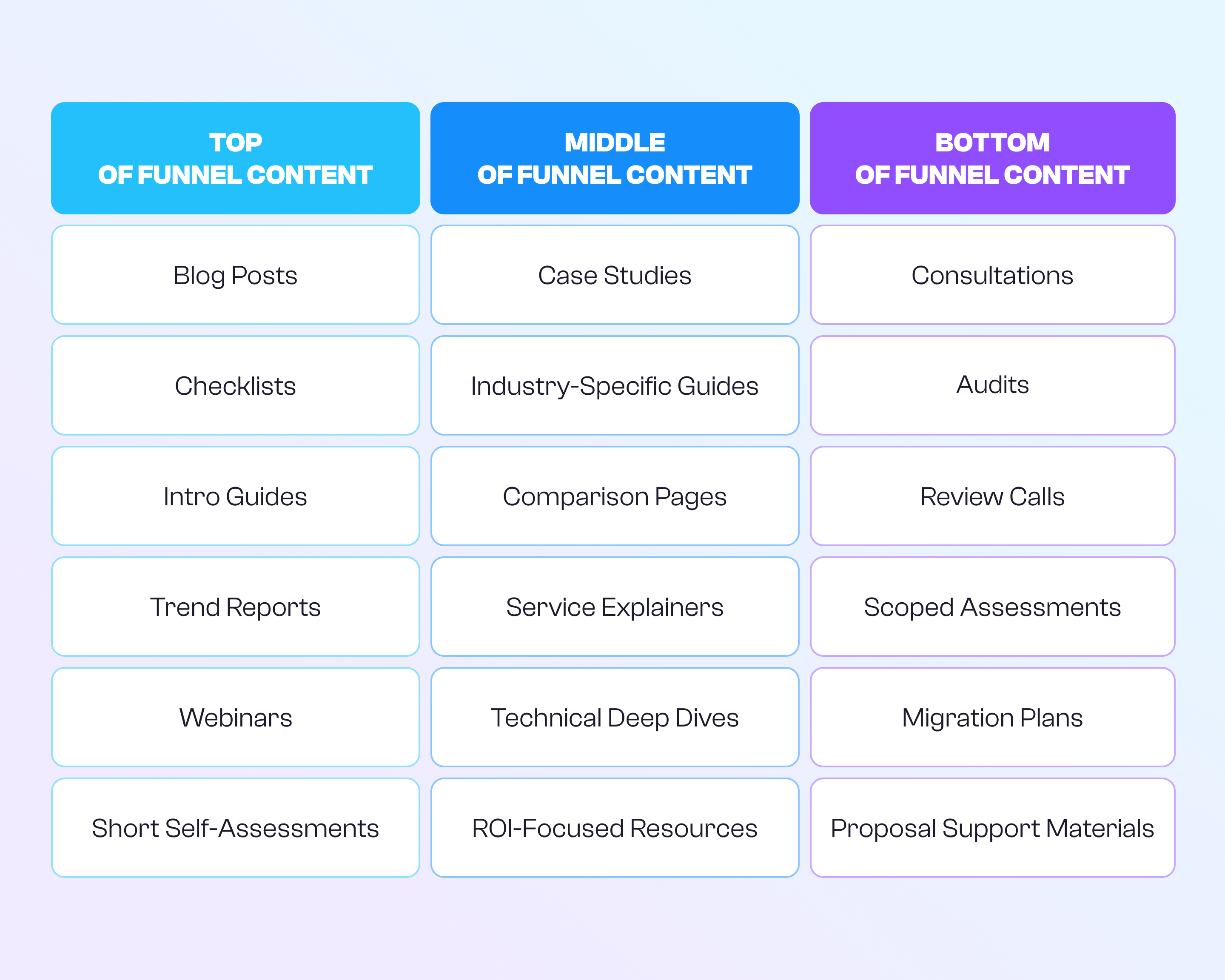
When content aligns with the funnel stage, it becomes easier to move MSP sales leads forward without forcing them into a conversation too early.
Use Content To Support Outbound
Content gives your outbound campaigns more weight. A cold email becomes more credible when it points to a useful guide, a relevant case study, or a resource tied to the prospect’s likely pain points. A LinkedIn follow-up feels more natural when it shares something genuinely helpful instead of jumping straight to a pitch.
That creates a better experience for the buyer and gives your team more ways to start conversations without sounding repetitive.
For MSPs, this is often where content becomes more valuable than teams expect. It is not just there to attract search traffic. It helps warm up outbound, support nurture, and make your offer feel more concrete.
Reach Buyers Earlier With Outbound
MSP lead generation services help reach good-fit accounts earlier, before they start filling out forms on competitor websites or asking peers for recommendations. The key difference is in how you do it. Broad cold outreach rarely works well. Targeted, persona-aware outreach tied to real business problems has a much better chance of opening the right conversations.
Many MSP buyers stay with an underperforming provider longer than they should. They keep patching internal IT capacity gaps. They postpone security improvements until the issue becomes urgent.
That creates an opening for smart outbound.
Instead of waiting for demand to emerge, MSPs can reach out to accounts that already fit their ICP and start the conversation earlier. This is especially useful when you sell services that solve ongoing operational pain, not just one-time project work.
Outbound is usually worth adding when:
- Your inbound pipeline is too inconsistent
- You want to reach specific verticals
- You need more control over pipeline creation
- Your best-fit buyers are not actively searching yet
This is also where many teams see the value of working with a lead generation partner. A service like SalesAR helps MSPs build outbound campaigns around the right accounts, the right message, and the right sequence, rather than relying on generic mass outreach.
Build Segmented Prospect Lists
The quality of outbound usually comes down to list quality first. If the list is broad, the messaging becomes broad too. If the targeting is sharp, the outreach has a much better chance of sounding relevant.
For MSPs, segmentation should go beyond basic firmographics. You want prospect lists built around the factors that actually shape buying needs and service fit.
This kind of segmentation makes it much easier to align outreach with real needs. A healthcare company facing compliance pressure should not receive the same message as a retail business opening new locations. A co-managed IT offer should not be framed the same way as a fully outsourced IT model.
This is one reason outsourced prospecting often outperforms ad hoc in-house list building. SalesAR, for example, places a lot of weight on account research and list segmentation, helping MSP campaigns start with better-fit prospects rather than inflated contact volume.
Common MSP Lead Generation Mistakes
Most MSP lead generation issues do not stem from a lack of effort. Teams are publishing content, sending outreach, updating service pages, and trying different tactics. The problem is that a few common mistakes keep weakening results before the strategy has a real chance to work.
The good news is that most of these issues are fixable once you spot them.
Targeting Everyone
This is probably the most common mistake. An MSP wants more leads, so the messaging stays broad enough to appeal to almost any business that might need IT support.
That usually sounds safe. In practice, it makes the offer much less persuasive. When the targeting is too wide:
- Messaging gets generic
- Service pages feel vague
- Outbound loses relevance
- Lead quality starts slipping
The stronger move is to narrow focus. That may mean prioritizing specific company sizes, industries, or service needs first, then building campaigns around those segments.
Using Generic Outreach
A lot of outbound underperforms for a simple reason: it sounds like it could have been sent to anyone.
MSP buyers are used to vague pitches that talk about “improving efficiency” or “reducing IT headaches” without saying anything concrete. Those messages are easy to ignore because they do not feel tied to a real situation.
Weak outreach often includes:
- Broad claims
- No clear pain point
- No reason for contacting that account now
- An immediate push for a meeting
Publishing Content Without A Conversion Path
Some MSPs invest in content, but the content is disconnected from pipeline creation. The blog may get traffic, but there is no strong next step. Service pages may explain the offer, but they do not guide visitors toward an action.
That creates a visibility-without-conversion problem.
A stronger setup gives content a clear role in the funnel:
- Blog posts support awareness
- Lead magnets capture interest
- Case studies build trust
- Service pages push toward inquiry
- Follow-up content supports nurture
Content works much better when it is built to move buyers somewhere, not just attract visits.
How SalesAR Fuels MSP Pipeline
Knowing what good MSP lead generation services look like is one thing. Running it consistently is another.
SalesAR helps solve that by giving MSPs a more structured way to build a pipeline. Instead of treating lead generation as a side task, it becomes an ongoing process built around targeting, outreach, qualification, and steady campaign execution.
SalesAR helps MSPs build outreach that brings in better-fit opportunities.
We Start With Better Targeting
SalesAR helps MSPs narrow targeting based on the factors that actually affect fit and conversion potential. That includes company profile, service alignment, likely pain points, and buyer roles, not just surface-level filters.
That approach helps reduce a few common issues:
- Wasting time on poor-fit accounts
- Sending the same message to very different audiences
- Pulling in leads that do not match the service model
- Creating extra work for sales during qualification
When targeting improves, the rest of the funnel usually improves with it.
We Build More Useful Prospect Lists
A prospect list should do more than give you names to contact. It should support the campaign strategy from the start. SalesAR builds segmented lists based on the audience the MSP actually wants to win. That may include:
- Companies in specific industries
- Businesses within a defined employee range
- Accounts with multi-location operations
- Organizations dealing with compliance pressure
- Teams that fit a co-managed or fully managed IT offer
This makes outreach more focused and gives sales a better chance of speaking with accounts that appear to be real opportunities.
We Shape Outreach Around Real Buyer Problems
SalesAR helps position outreach around the issues prospects are more likely to care about right now, such as overloaded internal IT teams, security gaps, poor support experience, growth-related complexity, or rising compliance pressure.
That makes the first touch more relevant because it is built around:
- The likely pain point
- The service fit
- The context behind the outreach
- A clearer reason to reply
The goal is not to sound clever. It is to make the message feel timely and useful.
We Support Multichannel Outreach
One email usually is not enough. Even strong-fit accounts may miss the first message or ignore it because timing is off.
SalesAR supports multichannel outreach, helping MSPs stay visible across multiple touchpoints in a more natural way. That includes:
- Email outreach
- LinkedIn touches
- Follow-up sequences
- Message testing and refinement
This gives campaigns more room to work without pushing too hard. It also helps create familiarity before the sales conversation starts.
We Bring More Structure To Pipeline Growth
SalesAR helps MSPs turn outbound from an occasional to a repeatable practice. With better targeting, cleaner prospect lists, more relevant messaging, and multichannel execution, cloud computing lead generation for MSPs becomes easier to manage and improve over time.
That structure is what helps the pipeline feel more predictable. Instead of relying only on referrals or waiting for inbound demand, MSPs get a clearer system for starting qualified conversations with the right accounts.
Conclusion
Once you get clearer on who you want to reach, what problems you solve best, and how you want to move buyers through the funnel, lead generation becomes much easier to improve. You stop chasing random interest and start building a process around qualified conversations.
That is where momentum actually comes from. Not from doing more for the sake of doing more, but from building a smarter system that fits the way MSP buyers research, compare, and decide.
Book a call to see how your MSP can build a more predictable outbound pipeline that’s aligned with your audience, offer, and growth goals.