












Outbound appointment setting once meant volume — more calls, more scripts, more grind. Now, it’s a science of timing, data, and relevance. Buyers have changed, and so has the game. They’re busier, more skeptical, and often several steps into their decision process before ever replying to a cold email.
With tighter data privacy laws, smarter automation, and a flood of tools claiming to “do it all,” sales teams have had to evolve. The best ones blend human empathy with machine intelligence. In this article, we’ll examine how personalization, predictive analytics, and AI-human collaboration are transforming the concept of modern appointment setting today.
- The Rise of Sales-Qualified Meetings
- The Omnichannel Evolution
- Hyper-Personalization and Contextual Messaging
- The Rebirth of Cold Calling
- The Speed Factor — Timing and the Right Moment
- Tech Stacks That Run the Operation
- Metric Maturity — Beyond Meetings Booked
- Cost and ROI Pressure — Doing More with Less
- Scaling Globally with Cultural Awareness
- Conclusion
- FAQ
The Rise of Sales-Qualified Meetings
For years, outbound teams were judged by one metric: the number of meetings booked. The more, the better — or so we thought. But here’s the shift: modern sales leaders don’t celebrate “a full calendar” anymore. They celebrate sales-qualified meetings that are not just booked, but booked with a clear intention.

SalesAR Insight: 61% of sales teams struggle to generate high-quality leads, and 43% say too few qualified meetings are their top bottleneck. That’s not a pipeline problem — it’s a precision problem. Instead of chasing 100 cold meetings, successful SDR teams now aim for 20 that align perfectly with the ICP and show genuine buying signals.
I’ve seen this firsthand. One campaign with 10 hyper-targeted meetings generated more pipeline than a previous quarter’s worth of volume outreach. Why? Because quality compounds. A single high-intent meeting can yield the same value as ten cold ones, without burning your domain reputation or your team’s energy.
The Omnichannel Evolution
There was a time when outbound meant one channel — usually cold email or endless phone calls. Today, prospects expect to be met where they are. That’s why the best appointment setting teams have gone omnichannel: blending email, LinkedIn, phone, and even SMS or short, personalized videos into a cohesive, intentional outreach flow.
Companies that employ an omnichannel appointment-setting approach experience response rates up to three times higher than those using single-channel outreach. Omnichannel is about knowing when and how to make an appearance. Here’s what that looks like in practice:
- Email opens the door. It’s often the first, low-friction touchpoint — quick, value-driven, and easy to track.
- LinkedIn reinforces credibility. Mutual connections, profile views, and posts build familiarity long before the call.
- Phone creates conversation. A warm call after prior touches doesn’t feel like cold outreach anymore.
- SMS or video adds personality. A 20-second video greeting or a short text follow-up can humanize your approach and boost response rates.
When these touchpoints are reached, your message starts to feel like presence, not pressure. Prospects recognize your name, recall your offer, and respond more willingly. That’s the essence of modern appointment setting: not random activity, but deliberate visibility across multiple channels, leading to authentic engagement.
Hyper-Personalization and Contextual Messaging
Buyers are inundated with messages that sound personal but fall short completely. What cuts through now is relevance. When your outreach shows awareness of where a company stands, what just happened, and why your timing makes sense, you’ve got their attention.
Think of it this way: if a company just launched a new product, you should align your message with that moment.
“Congrats on the new release! Saw your team is doubling down on customer retention. We recently helped a SaaS company at a similar stage increase demo-to-deal conversion by 24%.”
SDRs have begun shifting from personalization to intent-based storytelling, crafting outreach that references real events, data points, and emotions that resonate with the buyer’s actual situation.
This approach scales surprisingly well when powered by tools that surface trigger events, such as funding rounds, hiring trends, product updates, or even changes in tech stacks. It turns outreach from guesswork into timing. And in outbound, timing is everything.
Intent Data and Predictive Targeting
Thanks to buyer intent data and predictive targeting models, outbound programs are transitioning from a spray-and-pray approach to precision engagement.
Platforms like 6sense, Bombora, and ZoomInfo now track digital behavior across millions of data points: search terms, content engagement, LinkedIn activity, and website visits. This information is turned into behavioral scores, helping identify which companies are quietly researching your solution before ever filling out a form.
Here’s how leading outbound teams are using intent data effectively:
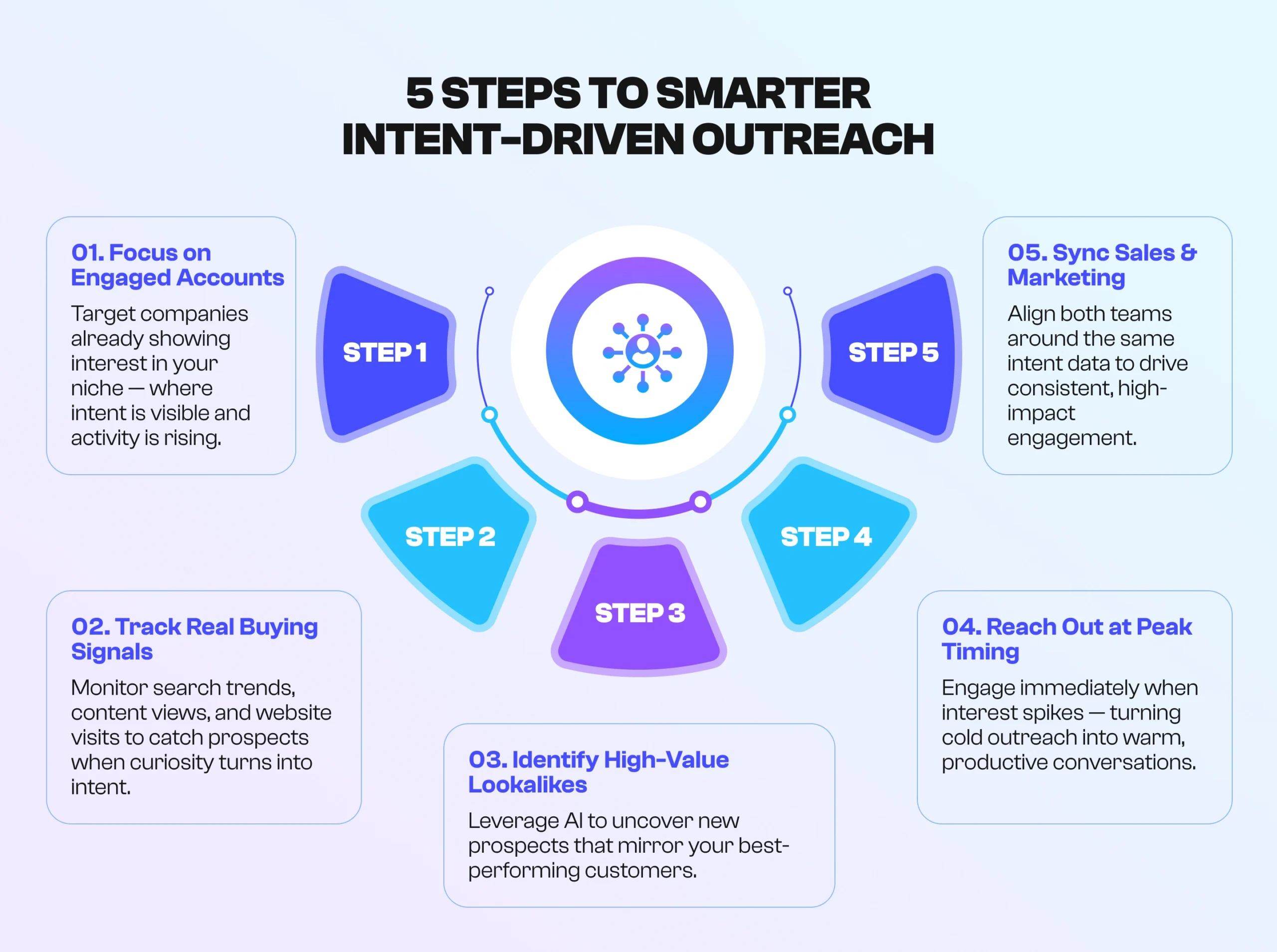
- Prioritize warm accounts — focus efforts on prospects who are already engaging with related topics, not just those on a static list.
- Mapping buying signals — track keyword spikes, website visits, content downloads, and social activity to know when interest peaks.
- Predicting ideal prospects — use machine learning to find “lookalike” accounts that match your highest-converting customers.
- Timing outreach strategically — reach out when activity surges, not weeks later when interest fades.
- Aligning sales and marketing — share data insights so campaigns and SDRs work the same high-intent list simultaneously.
When SDRs reach out at the exact moment a company starts researching a solution, conversations shift from cold to warm instantly. And when intent data and personalization work together, appointment setting stops being a numbers game and becomes a precision craft.
AI + Human Hybrid Model
If 2023 was the year of AI hype, 2025 is the year of AI integration — where technology quietly enhances, not replaces, the human touch. The best outbound teams aren’t automating everything; they’re augmenting what works.
At SalesAR, we refer to this as the “Augmented Appointment Setting” model — a collaboration between machine intelligence and human empathy.
AI now takes care of what used to drain SDR hours:
- Data enrichment — pulling job titles, company details, and fresh contacts from reliable sources.
- Lead scoring — predicting which prospects are most likely to engage based on historical conversion data.
- Email sequencing — testing subject lines, timing, and copy variations automatically to boost deliverability and open rates.
These are the repetitive, mechanical tasks where AI thrives. It never gets tired, it never forgets, and it learns from every campaign. But here’s the catch: machines don’t build trust. They can find who to talk to, but only humans can figure out how to do so.
That’s the essence of a modern appointment setting strategy — letting AI handle the volume and logic, while SDRs focus on tone, timing, and authenticity. When an SDR can spend more time understanding pain points, referencing real events, or tailoring follow-ups, conversion rates climb.

SalesAR Insight: Teams combining AI-powered research with human-led outreach saw a 32% improvement in meeting acceptance rates compared to those relying solely on automation. Automated systems now handle 60–70% of backend workload, freeing SDRs to prioritize meaningful engagement.
What’s exciting is how seamless this collaboration has become. AI delivers context: when a prospect’s company grows headcount by 15%, when their CEO mentions expansion, or when they interact with a competitor’s post on LinkedIn. Humans then take that insight and turn it into empathy-driven outreach.
This balance defines the next phase of outbound. Appointment setting is no longer about replacing SDRs with bots; it’s about empowering them with tools so every touchpoint feels personal, timely, and genuinely human.
The Rebirth of Cold Calling
The era of robotic scripts and relentless dialing is over. Cold calling 2.0 is about value-driven, permission-based conversations that respect the prospect’s time and intelligence.
More innovative tools and better timing fuel this evolution. AI-assisted dialers now sync with CRM data and intent signals, alerting SDRs when a prospect is most likely to respond or when their company exhibits purchasing activity. Combine that with behavioral insights, and every call suddenly feels less random, more relevant.
Cold calling has found its place again, not as the blunt force of outbound, but as its most personal touchpoint. When done right, it’s a conversation starter, not a calendar filler. And in 2025, the voice might just be the most underrated channel in outbound appointment setting.
The Speed Factor — Timing and the Right Moment
If there’s one thing outbound teams are obsessing over this year, it’s speed. In an age of automation and instant alerts, the fastest responder often wins. Research from Industry benchmarks consistently shows that leads contacted within 15 minutes are 9 times more likely to convert than those reached later.
That window has become the battleground for appointment setters. Whether it’s replying to a demo request, a LinkedIn comment, or a positive email response, timing determines trust.
The best outbound teams now treat response time as a core KPI, right alongside meetings booked or reply rates. They utilize automation to flag hot leads in real-time and trigger human follow-up instantly. It’s not just about having a process; it’s about removing delay from every step.
Here’s what that looks like in practice:
- AI tools route replies directly to available SDRs.
- CRM alerts ping within seconds of engagement.
- Calendly links are personalized and ready to send immediately.
- SDRs work in micro-teams to ensure round-the-clock coverage across time zones.
Once the spark fades, effort increases, but results decline. Those who can sustain it will dominate in 2025 and beyond.
Tech Stacks That Run the Operation
Five years ago, an SDR could get by with a spreadsheet, an inbox, and a list of leads. Not anymore. In 2025, CRMs have become command centers, powering every move in the outbound process. They’re integrated ecosystems where data, automation, and human insight work in sync.
At SalesAR, we’ve seen this shift reshape how appointment setters operate. The modern SDR’s workspace looks less like a notepad and more like a cockpit: one dashboard showing who’s engaging, when they engaged, and what to do next.
Here’s what a top-performing tech stack typically includes:
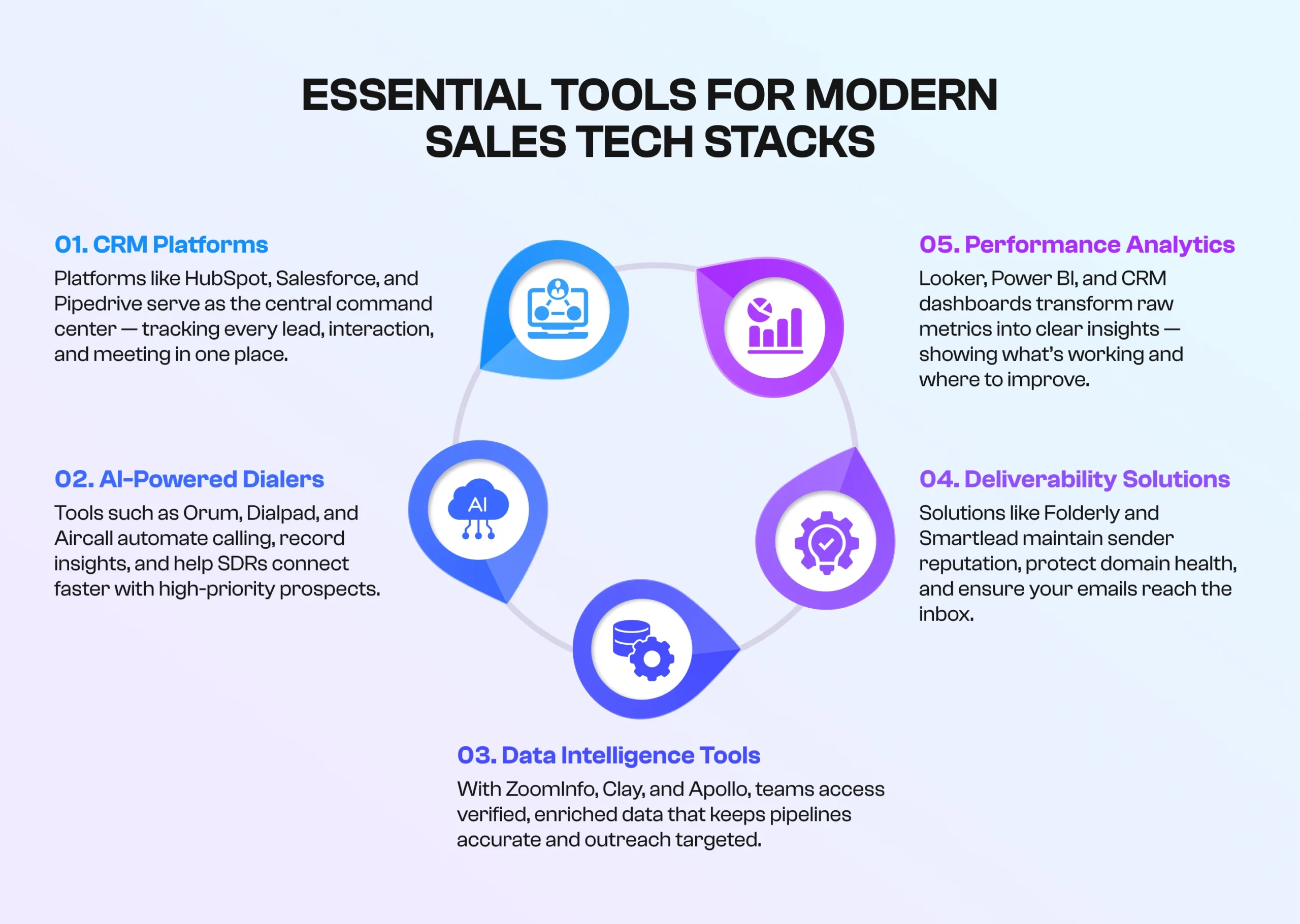
- CRM (HubSpot, Salesforce, Pipedrive) — The core system of record. Every interaction, from email opens to booked calls, lives here.
- AI Dialers (Orum, Dialpad, Aircall) — Automate dialing, record insights, and prioritize numbers with the highest connection probability.
- Data Tools (ZoomInfo, Clay, Apollo) — Feed accurate, enriched data directly into outreach flows, cutting research time dramatically.
- Deliverability Platforms (Folderly, Smartlead) — Keep domains warm, maintain healthy sender scores, and protect reputation.
- Analytics Dashboards (Looker, Power BI, custom CRM reports) — Turn performance metrics into actionable insights in real time.
Teams using integrated tech stacks typically book significantly more qualified meetings than those juggling disconnected tools, thanks to smoother data flow and less manual work. The reason is simple: every second spent switching between platforms is a second not spent engaging prospects.
- The latest trend is unified outreach dashboards — systems that combine data enrichment, sequencing, and performance analytics into a single view. SDRs can now see, at a glance, who opened the last email, which LinkedIn post got engagement, and which contact just visited the pricing page.
- This real-time visibility changes everything. Instead of working from static lists, teams react dynamically — adjusting messaging, prioritizing accounts, and reallocating effort based on live data. It’s operational clarity meets agility.
The result: fewer blind spots, faster response times, and a tighter connection between activity and outcomes. The modern appointment setter runs a data-driven operation, powered by a stack that thinks alongside them.
Metric Maturity — Beyond Meetings Booked
For years, outbound success was measured by one key metric: the number of meetings that were successfully scheduled. But in 2025, that metric is outdated. The reason? A booked meeting doesn’t mean much if the prospect never shows up, or worse, isn’t remotely qualified. The objective measure of outbound performance is the impact on revenue, not the volume of activity.
Modern SDR teams now build their scorecards around a more nuanced set of metrics:
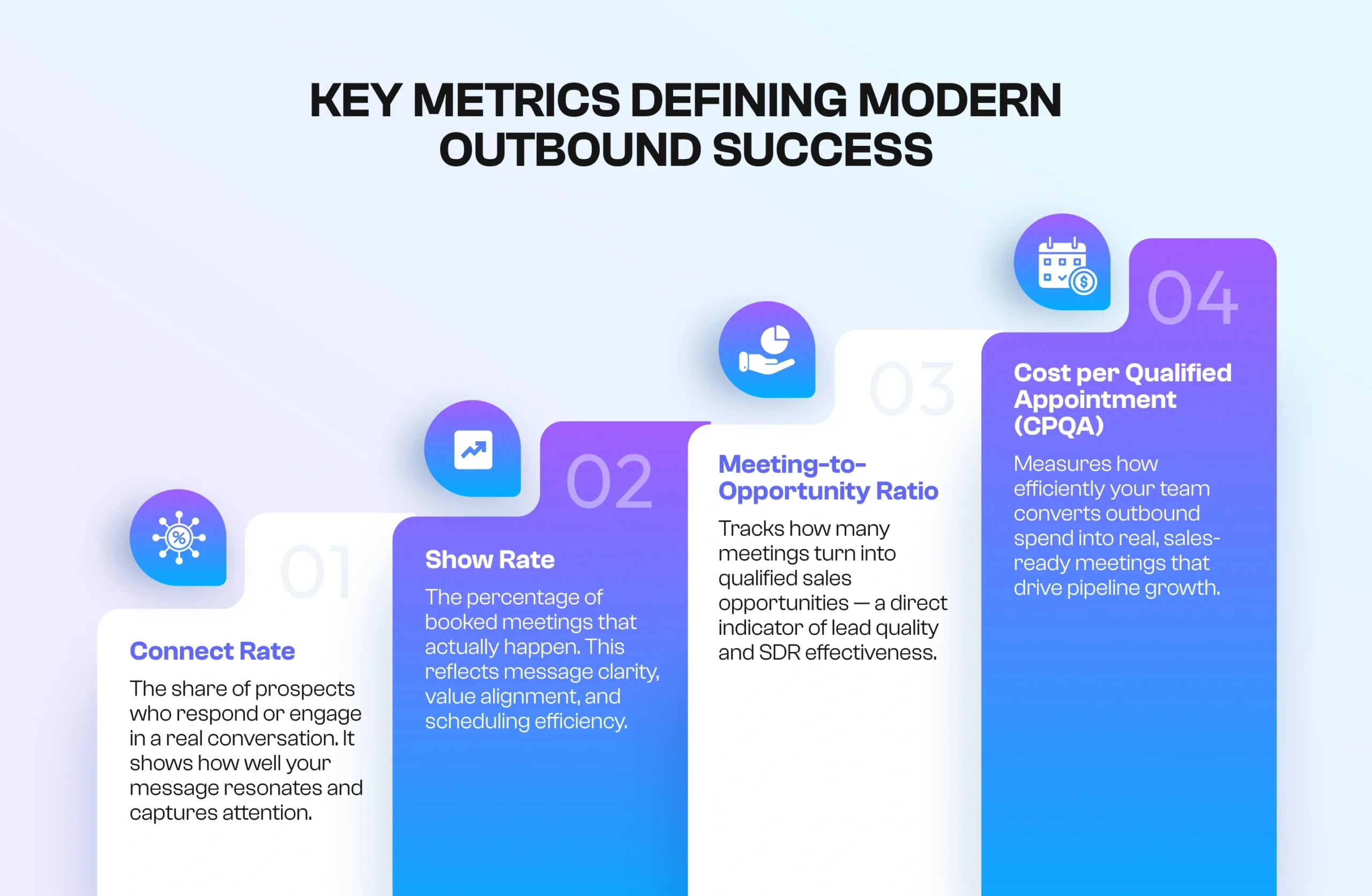
- Connect Rate: the percentage of contacts that turn into actual conversations. It’s the pulse of prospect engagement and messaging resonance.
- Show Rate: the share of booked meetings that actually happen. Tracking this helps identify whether messaging sets accurate expectations.
- Meeting-to-Opportunity Ratio: how many meetings convert into true sales opportunities. This ties SDR performance directly to pipeline contribution.
- Cost per Qualified Appointment (CPQA): the total outbound spend divided by the number of high-quality, sales-ready meetings delivered.
These metrics push teams toward alignment. When SDRs understand how their efforts impact downstream revenue, their strategy changes: emails become more focused, follow-ups more relevant, and targeting more refined.
Cost and ROI Pressure — Doing More with Less
Here’s the blunt truth: outbound isn’t cheap, and in 2025, budgets are tighter than ever. According to Leads at Scale’s 2025 pricing benchmarks, the average cost per qualified appointment has risen by nearly 18% year over year, driven by higher data costs, increased competition, and rising labor expenses.
But here’s the twist — efficiency is also up. Every booked meeting today carries more weight, more intent, and more ROI. Outbound teams have learned to do more with less by refining every step of the process.
What’s driving that efficiency?
- Smarter targeting: Intent data ensures SDRs spend time only on accounts that show genuine interest.
- Automation-first workflows: AI tools handle enrichment, sequencing, and reporting, allowing humans to focus on relationship-building.
- Performance visibility: Teams track ROI in real-time, cutting underperforming campaigns before they drain the budget.
- Cross-channel: Consistent messaging across email, LinkedIn, and phone increases conversions without increasing costs.
The financial pressure has quietly given rise to a new kind of outbound discipline. Every SDR touchpoint now needs to earn its place in the sales process. Teams now experiment more, test more, and personalize more — not because they have more money, but because they can’t afford to waste any.
The upside? Outbound appointment setting has become leaner, smarter, and more accountable. The focus is no longer on generating leads, but on converting each one efficiently into revenue.
Scaling Globally with Cultural Awareness
Outbound appointment setting used to be a one-size-fits-all approach. One cadence, one tone, one script. That doesn’t work anymore — not when your prospects could be in Chicago, Berlin, or Singapore. As outbound goes global, localization has become a competitive edge.
Buyers respond to different emotional rhythms. What feels confident and efficient in the U.S. might sound aggressive in Europe. What works in the U.K. can fall flat in Latin America. The best outbound teams have learned that personalization starts with geography.
Here’s what that looks like in practice:
- Europe: leads respond better to context-driven messaging — softer CTAs, longer introductions, and respect for hierarchy.
- United States: prospects expect brevity and energy. SDRs often succeed with faster cadences and direct CTAs.
- APAC: messages that highlight partnership, reliability, and reputation tend to outperform aggressive pitches.
- DACH region: credibility is everything — referencing data, case studies, or compliance details builds trust early.
At SalesAR, teams running multi-region campaigns build region-specific cadences with localized copy, cultural tone, and time-zone-specific delivery. That slight shift alone can double engagement rates.
The global scale no longer means copying and pasting outreach across borders. It means tailoring communication to match how people buy, make decisions, and trust. And as more companies go international, that cultural awareness becomes the difference between sounding relevant and sounding robotic.
Conclusion
We’ve moved past the era of brute-force outreach where success was measured in call volumes and email counts. What defines the new generation of appointment setting is precision force — the ability to reach the right person, at the right time, with the right message.
Today’s outbound strategies blend predictive data, omnichannel engagement, and AI-powered efficiency with something no tool can automate: human understanding. The best SDRs create clarity — following an appointment setting strategy built on timing, empathy, and insight. They utilize every insight, every signal, and every moment of attention to initiate conversations that matter.
Outbound has become less about who shouts the loudest and more about who listens best. And that’s what will separate good teams from great ones in 2025 and beyond.
Book a call with SalesAR and see how our lead generation and appointment setting experts can accelerate your B2B pipeline.
FAQ
What is outbound appointment setting?
Outbound appointment setting is the process of reaching out proactively to potential customers to schedule sales-qualified meetings. It’s about creating opportunities, not waiting for them to come in.
How is outbound appointment setting different from inbound?
Inbound appointment setting captures interest from leads who come to you through ads, SEO, or content marketing. Outbound, on the other hand, targets ideal prospects before they’ve expressed interest. It’s proactive rather than reactive — you identify who fits your ICP and start the conversation yourself.
Why is outbound appointment setting important for B2B sales?
Outbound enables B2B companies to engage decision-makers early, foster relationships, and consistently generate a steady pipeline. It’s especially powerful for complex or high-ticket solutions, where deals often begin long before a form is ever filled out.
What channels are most effective for outbound appointment setting?
The strongest results come from omnichannel outreach, which combines email, LinkedIn, and phone, sometimes supported by SMS or personalized video. Each touchpoint reinforces the others, building recognition and trust that turn cold prospects into warm conversations.