




Lead Generation for Product Design Studio: 34 appointments and 345 Replies for The Gradient
The Gradient needed a structured outbound system to support business development across multiple markets and industries. The company already had a strong offer in product design, UX/UI, AI-driven product experiences, and digital transformation. What was needed was a way to reach the right companies, start relevant conversations, and track which outreach channels created real engagement.
SalesAR built a multi-channel lead generation campaign across research, email, and LinkedIn. The campaign helped The Gradient expand its prospect base, test messaging across several audience segments, and create more direct conversations with potential buyers.
Client Background
The Gradient is a Ukraine-based product design and digital experience studio. The company helps businesses create and improve digital products through UX/UI design, product strategy, mobile-first experiences, and AI-powered user journeys.
Its work is relevant for companies that need stronger digital products, clearer user flows, better product engagement, or support with AI-native interfaces.
For The Gradient, outbound growth required more than a large contact list. The team needed to reach companies where product experience was already a business priority, then speak to those prospects in a way that felt specific, timely, and useful.
That is where SalesAR came in.
The Challenge
The Gradient needed a lead generation system that could support outreach across different markets and buying contexts.
The campaign had to solve several practical challenges:
- Build a large database of relevant companies and contacts.
- Reach prospects through more than one channel.
- Test email and LinkedIn outreach at scale.
- Track replies and campaign engagement.
- Identify which channels created the strongest prospect response.
- Connect outbound activity with client-reported calls.
- Support multiple campaign angles without relying on generic messaging.
The main task was to turn outbound activity into measurable conversations.
Goals
SalesAR focused on building a campaign to increase The Gradient’s visibility among potential buyers and create a steady flow of conversations.
The goals were to:
- Research relevant companies and contacts.
- Launch email outreach campaigns.
- Use LinkedIn as a dedicated engagement channel.
- Generate prospect replies.
- Track campaign performance across outreach channels.
- Help The Gradient understand which channel brought the strongest engagement.
- Connect campaign-sourced opportunities with client-reported call activity.
The focus was not just volume. The campaign needed enough reach to test the market, but it also needed clear tracking so the team could see which outreach channel was doing the heaviest lifting.
SalesAR’s Strategy
SalesAR built the campaign around four core areas: research, email outreach, LinkedIn outreach, and opportunity tracking.
1. Company and Contact Research
The campaign started with database building.
SalesAR researched:
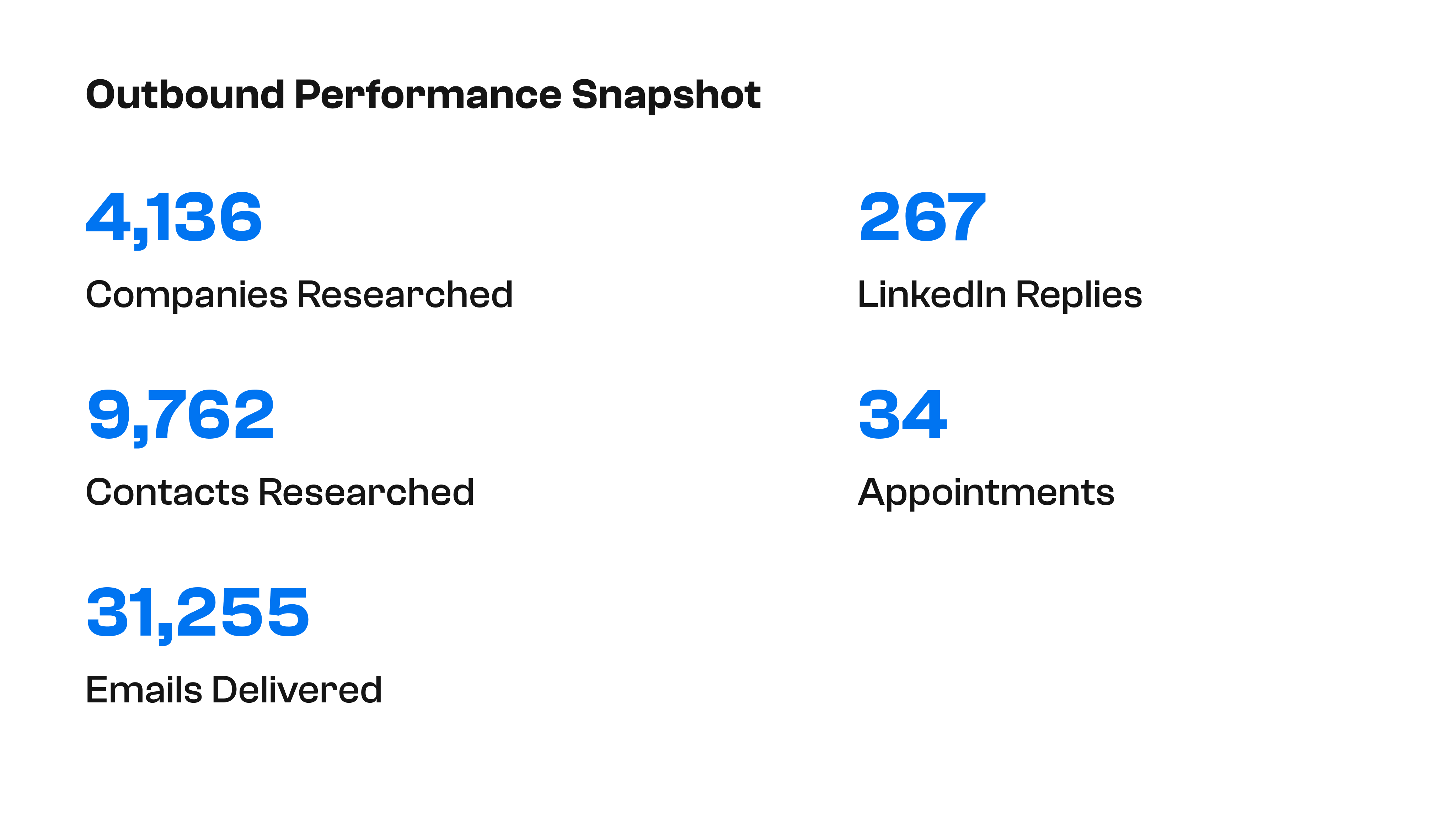
- 4,136 companies
- 9,762 contacts
This gave the campaign a strong base for testing outreach across different segments, industries, and markets.
The research stage helped The Gradient move from broad targeting to a more structured outbound process. Instead of relying on scattered prospecting, the campaign had a clear pool of companies and contacts to work from.
2. Email Outreach
Email gave the campaign scale.
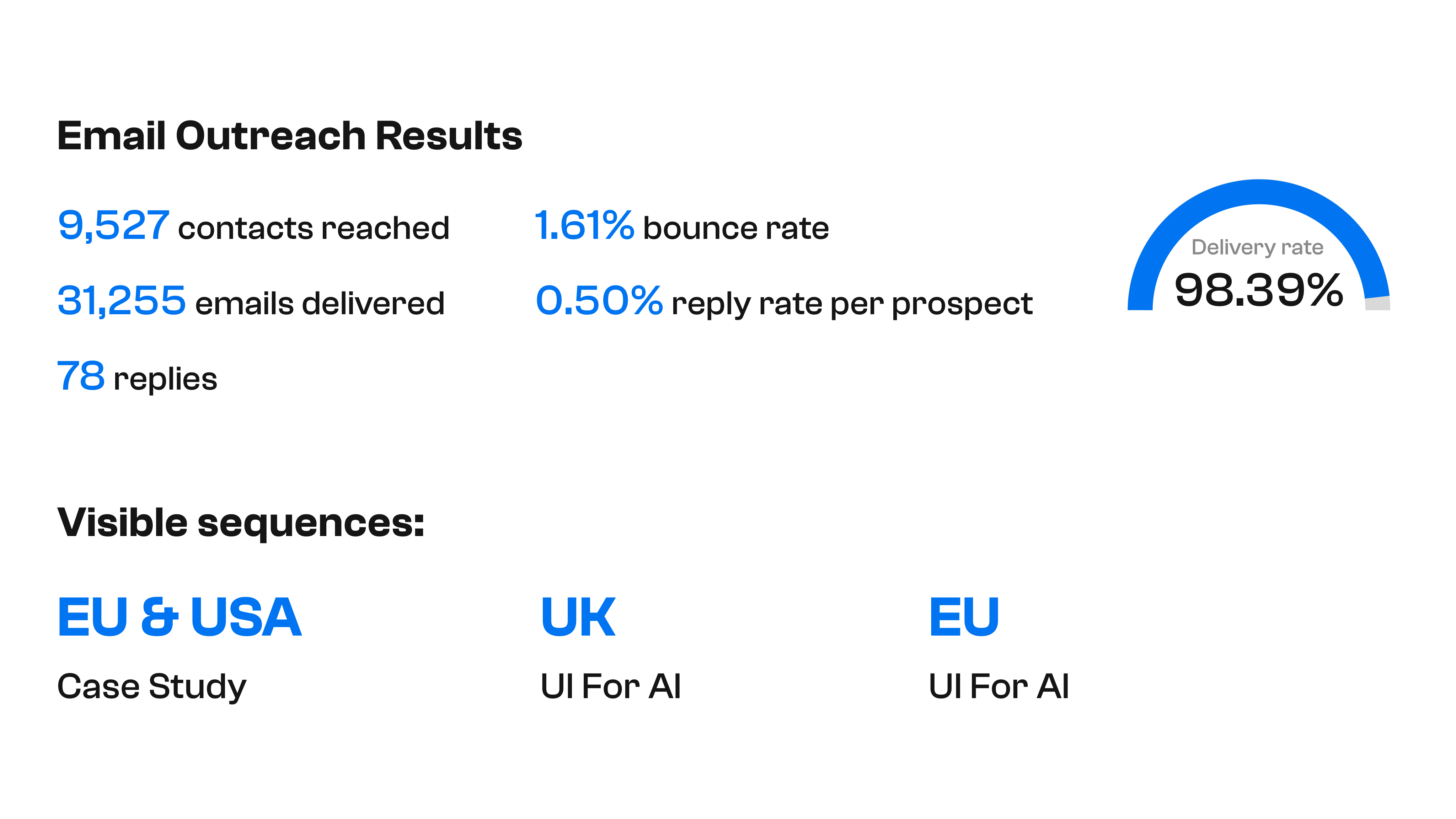
SalesAR launched multiple email sequences and tracked delivery, opens, and replies. The dashboard showed three visible campaign sequences:
- Case Study | EU & USA
- UI for AI | UK
- UI for AI | EU
Across the email campaigns, SalesAR reached:
- 9,527 email contacts
- 31,255 delivered emails
- 415 opens
- 78 replies
The email channel showed strong deliverability:
- 98.39% delivery rate
- 1.61% bounce rate
- 1.34% open rate per email
- 0.25% reply rate per email
- 3.61% open rate per prospect
- 0.50% reply rate per prospect
Email worked as the scale channel. It helped The Gradient reach a large number of researched contacts while keeping the bounce rate low.
3. LinkedIn Outreach
SalesAR used LinkedIn as a dedicated engagement channel alongside email.
The team sent connection requests, followed up with accepted contacts, and tracked replies from prospects who matched The Gradient’s target audience.
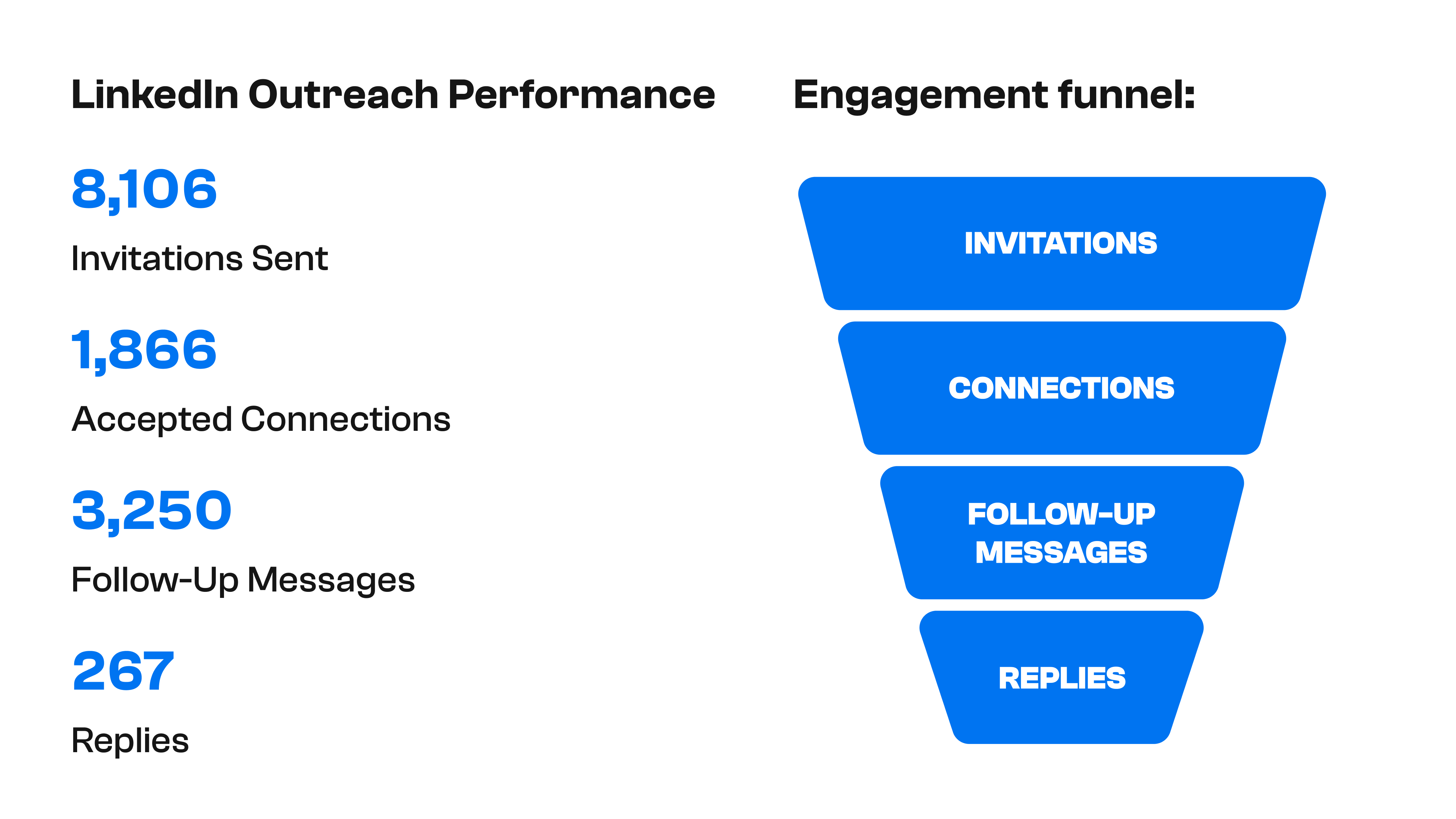
Across LinkedIn outreach, the campaign generated:
- 8,106 invitations sent
- 1,866 accepted connections
- 3,250 follow-up messages
- 267 replies
LinkedIn became the strongest visible response channel in the dashboard. It created more replies than email and helped turn cold prospects into active conversations.
This made LinkedIn a key part of the campaign.
4. Opportunity and Call Tracking
SalesAR tracked campaign outcomes beyond email and LinkedIn replies.
The report showed how many conversations progressed to direct calls following campaign engagement.

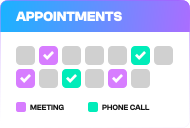
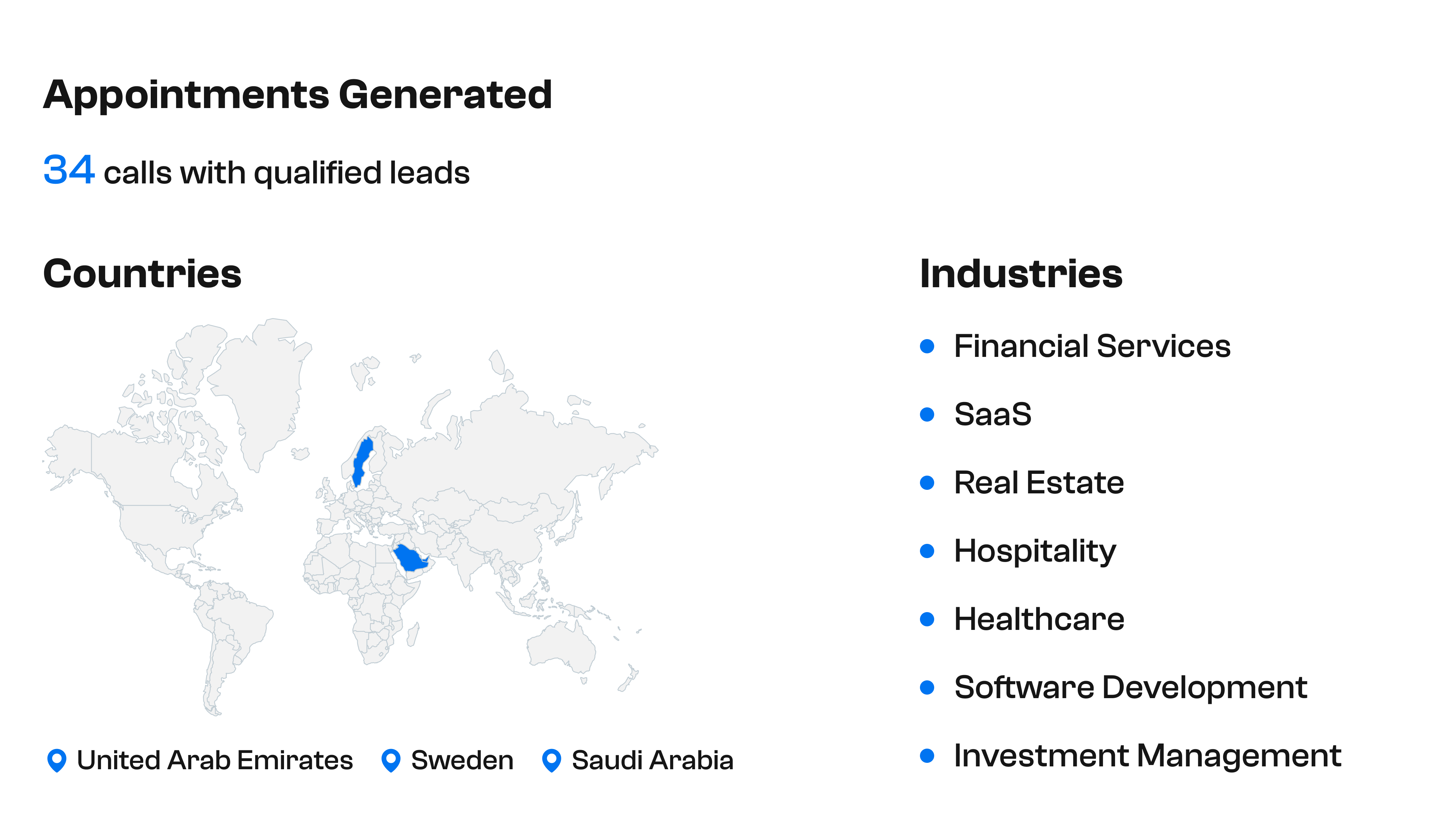
34 appointments connected to campaign-sourced opportunities
These were calls connected to opportunities created through the outreach campaign.
Responsible Team
Account Manager: Anastasiia Kuznetsova
SDR: Valeriia Krylova
Research Lead: Vlad Yaremenko
The team managed research, outreach setup, campaign execution, response tracking, and performance reporting.
Results
SalesAR built a full outbound motion for The Gradient across research, email, and LinkedIn outreach. The campaign created a large prospect base, supported consistent outreach, and helped The Gradient track conversations that moved beyond replies.
Main campaign results
- 4,136 companies researched
- 9,762 contacts researched
- 345 replies
- 34 appointments with potential clients
- 9,527 email contacts reached
- 31,255 emails delivered
- 98.39% email delivery rate
- 1.61% email bounce rate
- 78 replies
- 8,106 LinkedIn invitations sent
- 1,866 LinkedIn connections
- 3,250 LinkedIn follow-up messages
- 267 replies
The strongest engagement came from LinkedIn, which generated 267 replies. Email supported the campaign with strong volume and 78 replies. This led to 34 appointments with potential clients.
Why It Worked
The campaign worked because SalesAR did not rely on a single channel or message.
Email created scale. LinkedIn created more direct engagement. Opportunity tracking gave the team a better view of what happened after prospects replied.
The research base mattered too. With 4,136 companies and 9,762 contacts researched, The Gradient had enough market coverage to test different audience segments and see where engagement was strongest.
A few things made the campaign effective:
- A large, researched contact base.
- Multi-channel outreach instead of email-only prospecting.
- LinkedIn follow-ups that turned accepted connections into replies.
- Strong email deliverability and a low bounce rate.
- Clear tracking across research, email, LinkedIn, and client-reported calls.
LinkedIn generated the strongest visible engagement, while email provided the campaign with scale and coverage.
LOOKING TO BREAK INTO HARD-TO-REACH MARKETS?
SalesAR empowers growth-focused companies to connect with high-value decision-makers through tailored outreach and data-driven strategy.
Whether you’re targeting niche industries or need help understanding how to generate B2B leads in technical markets, SalesAR provides proven B2B lead generation strategies tailored to infrastructure vendors, system integrators, and B2B companies.
Schedule a consultation to discover how we can support your team with professional lead generation for hardware companies.